
Close
by Sabrina Schiavinato | Feb 24, 2026
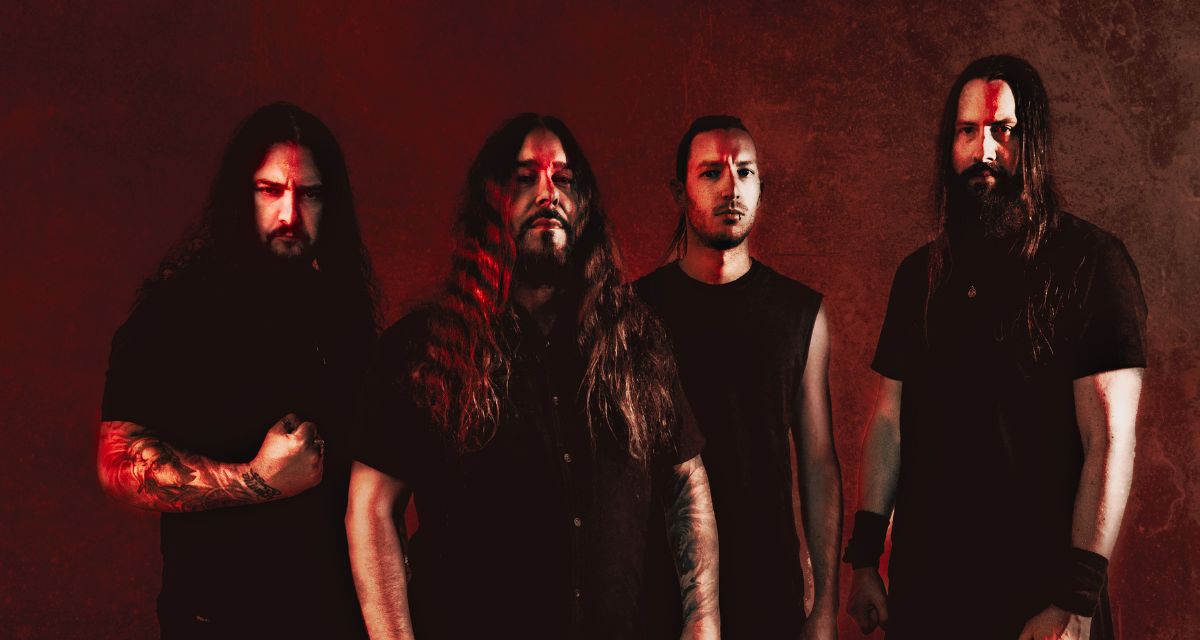
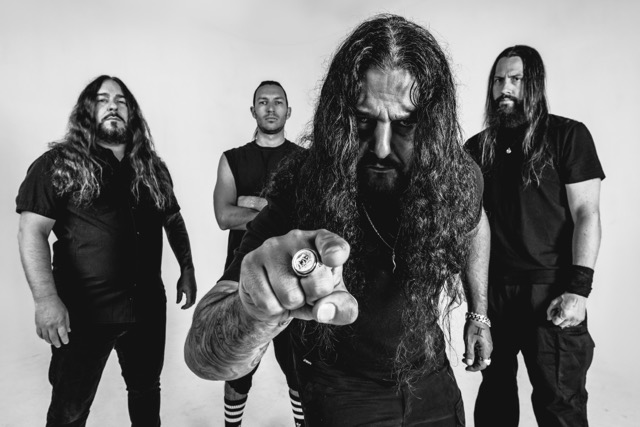
The US/French Canadian-based melodic death metal band Kataklysm is now touring Europe, and we couldn’t miss the opportunity to chat a bit with lead singer Maurizio about live shows, underground bands and of course, women in metal. You can read here what we talked about!
Sabrina
Hello Maurizio, thank you so much for your time. I know you’re incredibly busy with the show and the tour dates ahead.
Maurizio Iacono
Yes, many dates indeed.
Sabrina
How do you feel? What is the vibe of this tour so far?
Maurizio Iacono
It’s good. What’s interesting is that the last time we toured with Vader in Europe was 1998. It was a long time ago, so nostalgia was one of the reasons we wanted to do it again. I’ve been friends with Peter for a long time. We did the US together, and I suggested we bring it to Europe. It was great in the States, and it’s been a very good start to the year here as well. It’s been pretty cool.
Sabrina
I was actually going to ask about touring with those two big bands. Have you toured with Blood Red Throne before as well?
Maurizio Iacono
No. I saw Blood Red Throne on the 70,000 Tons of Metal cruise and was really impressed. I felt they fit our style well. They’ve been around for so long, but I didn’t feel I’d given them a proper chance yet, so I invited them on board. They jumped at it, and it’s a cool package. People are really enjoying it.
Sabrina
I’ve already seen some sold-out shows. That’s very exciting.
Maurizio Iacono
There is a lot of competition in England right now. I think Heaven Shall Burn was here a couple of days ago. A lot is happening at the same time, but we’ve been doing well regardless.
Sabrina
It’s been a strong winter season for the UK with many bands coming through. Compared to last year, it feels much better. You look in great shape for the performance. I’m curious about the setlist—with all your experience, is there a particular song that has become the “final boss” to play?
Maurizio Iacono
There’s always been one: “The Black Sheep.” For us, that’s a very big song. We usually end with it, but we’re actually changing that for this tour. I don’t want to give away the surprise, but we’ve made a few changes. We brought back some older songs we haven’t played in a long time to switch things up. Kataklysm is a strange band in that we could have two or three different setlists filled with “hit” songs. We have a lot of strong material, so it becomes a problem when choosing. You can never satisfy every fan. They’ll ask why we didn’t play a certain track, and the answer is usually just that we played it last year. But there are must-plays—our “Reign in Blood” moments. “The Black Sheep” is the big one at the moment; people really relate to it.
Sabrina
Do you keep the same setlist throughout the tour, or do you swap songs out?
Maurizio Iacono
We swap one or two songs every night. Some people come to all four shows, so for them, I want to make it different. However, the problem is that if you change too much, fans in the next city might complain that they didn’t get to hear the song you played online the night before. Swapping one or two is the right balance.
Sabrina
I’ve noticed many bands struggle with that balance.
Maurizio Iacono
I’m still nostalgic for the old days when you could change a setlist, and nobody would know unless they called each other. Now, with social media, the info drops the next day, and everyone knows everything. Information moves so fast. We still swap at least one song to mess with them.
Sabrina
Don’t give too much away! I heard a rumour that you might stop after this tour to start working on new music. Is that the plan?
Maurizio Iacono
Yes. We’re going to announce another US tour soon, which will conclude the cycle for this record. We also have a few openers, a show in Dubai, and a festival in Turkey. After that, we’re heading to the studio we built in Florida to write and record the next record together. This is the first time we’ve done this since In the “Arms of Devastation” in 2006. For nearly 20 years, we’ve used technology to send each other riffs and lyrics because we live in different cities—Florida, Los Angeles, Dallas, Montreal. We want to return to our roots. Technology is taking over so much that you lose that organic feeling. We have a log cabin attached to the studio on an acre of land; we want to be in nature and record the way we used to. We’re going to document it, too. It’s a completely different approach this time.
Sabrina
Have you thought about a theme or inspiration for the new material yet?
Maurizio Iacono
The band has always been about positive, uplifting energy. I don’t buy into all the dark stuff going on. I’m a fighter; I came from the bottom to work my way to where I am, and I want to push that message. It’s going to continue that “Goliath” ideology—fighting the system and uplifting the soul.
Sabrina
Your music often feels cinematic. Have you thought about specific “soundtrack” elements for the next era?
Maurizio Iacono
I’m not there yet. We’ve used intros and outros since 2000. Even the “The Road to Devastation” single we released had a speech from a UK series. There will always be that idea or concept behind the record, but we’ll keep the specifics a surprise.
Sabrina
You are also very active on the business side of music now. How does the experience of being on stage compare to being a manager?
Maurizio Iacono
On stage, it’s passion and release. Some people use a punching bag; I use the stage. It’s an outpouring of emotion. I’ve done this since high school, so it’s all I know. I don’t know if I’ll continue doing five-and-a-half-week tours forever, but I need that live output. The business side is a different beast. It’s a game, a complex game of chess. It’s interesting how many things from regular society apply to the metal business. As a musician, you hear people complain about not having enough, and in this industry, the “worker” often gets the least. I’m coming in with a different mentality to try to level the playing field. Sometimes that makes me an “enemy on the inside” to the establishment, but more musicians are starting to want to understand why things are the way they are.
Sabrina
Do you feel it’s a natural process for musicians to evolve into the business side?
Maurizio Iacono
For me, it was. From day one, I wanted to learn how the system worked. Many musicians want to create art, and that’s fine—that’s why they need managers. I see it like football players becoming coaches. You were in the trenches, you understand the game, and now it’s your turn to share that experience. Some people in power prefer to keep artists ignorant, so I try to educate both sides. It’s rare to see a musician managing so many bands—I manage Windrose, for example. I saw their potential when they were a “pay-to-play” band, and no one wanted to sign them. Seeing them succeed feels like a victory. We operate like a family.
Sabrina
Windrose is a great example. We’ve followed them since they played tiny stages for 150 people.
Maurizio Iacono
Exactly. I met them on the Ensiferum tour. Because I have the experience and connections, I helped them. It’s a natural progression for me.
Sabrina
What advice would you give to someone wanting to start as a manager or producer rather than just a musician?
Maurizio Iacono
You have to listen, and you must have instinct. You have to understand if a band has potential. In the end, it’s a business—you’re selling a product. If a band doesn’t have the capacity to grow, your reputation goes down with them. You have to understand that some things take years. I have bands like Unleash the Archers or Windrose that grow fast, and others like Fleshgod Apocalypse that take solid, big steps. My goal is to bring bands to a level where costs don’t consume them, so they can create without worrying about the rest. You also have to be organised and realise you can’t do it alone. You need a team. My advice is to study what you’re trying to do and use tools like Spotify as an indicator of what people are actually listening to.
Sabrina
Looking at the industry in 2026, what is a skill musicians need now besides playing their instrument?
Maurizio Iacono
It’s very different now. When I started, the fax machine was the internet! Now, everything moves extremely fast. With the integration of AI, I’m sceptical, but I see the advantages for information and planning. In art, if you have a vision but can’t find an artist to reproduce it perfectly, AI can help. For my project Ex Deo, if I need five historically accurate portraits of Roman emperors, a human artist might charge $15,000. I can use AI to scan archives and create that persona for $50 in ten minutes. Does it replace a human? In that context, I’m using it for historical reproduction, not as a replacement for a human soul. I don’t believe AI should write music—music must come from the soul. But in 2026, musicians will need to use these tools for the “everything else” to compete.
Sabrina
Some say many jobs will disappear in the next five years due to this.
Maurizio Iacono
Podcasts and interviews like this will stay, but you’ll have to integrate these tools. One thing that won’t change is the live factor. You can’t replace the human experience of a concert. I’ve actually seen an uptick in concert attendance because it’s the only place people can still get together physically. The human element won’t die out in metal.
Sabrina
You mentioned the business side—using AI is also about understanding where to manage costs.
Maurizio Iacono
Exactly. Recently, we used AI to animate our artwork for social media. The response was huge—150,000 views—but the backlash was heavy as well. People asked, “How could you do this?” The reality is that a traditional editor would have charged $15,000 for a five-second animation. We’re in an adjustment period. It looks like the Wild West now, but eventually, there will be laws. I thought it was cool to see the “Goliath” artwork actually move with the slingshot. Some people hate it, some love it, but more will do it.
Sabrina
We’ve seen bands like Helloween and Mayhem using a lot of AI visuals and LED screens lately.
Maurizio Iacono
It’s a trend. It’s very expensive to invest in that, and as a manager, I have to look at the return. If a band spends everything on screens and can’t pay rent, that’s not good.
Sabrina
Finally, our webzine focuses on female artists in metal. As a manager and musician, do you think it’s still as difficult for women to succeed in this scene?
Maurizio Iacono
Much less so now. It used to be a credibility issue, but times have changed. It’s much more accepted now; there are female vocalists and guitarists everywhere. With a band like Unleash the Archers, I see how hard they work and how much they are recognised. In 2026, I don’t see it as the struggle it once was. The scene is growing, and it will only get bigger.
Sabrina
I do want to ask—is there anything you’ve ever wanted to talk about that people rarely ask you? We have a few minutes left.
Maurizio Iacono
“How do you do it all?” That’s the big one. I’ve been asked that before, and honestly, I sometimes can’t answer it. I don’t know.
Sabrina
Between being a musician, a manager for eight bands, and a father of three…
Maurizio Iacono
Yeah, it’s a lot of work. And now I’ve been pulled into a record label to run a part of that as well. Sometimes it feels like too much, but it keeps me going. As long as I have the juice to do it, I feel like I have to. If I don’t pass on what I’ve learned, there won’t be a future for this scene. Think about it: the massive headliners are starting to disappear as they get older. Ozzy is gone from the stage. In the next five years, who knows if Judas Priest will still be around? Some of these legendary bands are going to go away, and who is replacing them? We have to develop the bands at the bottom to ensure the genre survives.
Sabrina
That is a very important point.
Maurizio Iacono
Exactly. Plenty of cool bands are popping up, but achieving that legendary level of success isn’t common anymore; it’s much more difficult. Again, it mirrors our everyday life and political systems. It used to be that we had a lot of “middle-class” bands, but now you see a growing separation. You’re either getting really big, or you’re struggling. That middle ground is vanishing, and it needs to be repaired for the industry to move upward. If you want to be a manager, those are the things you have to think about. It’s a process. You start with a small band that you can guide, and you learn from the mistakes along the way. Everyone makes mistakes—including me. You have to learn from them and practice, because you can’t just jump into this 100% perfect. But there is a massive need for good management. There are so many bands out there that need help. Sometimes I see a really great band, and I think, “I want to take them on,” but I just can’t. I don’t have the time.
Sabrina
You have to protect your energy, of course.
Maurizio Iacono
Yes, and stay healthy! That is very important.
Sabrina
Maurizio, thank you so much for sharing your experience and your time with us. It’s been a pleasure.










0 Comments