

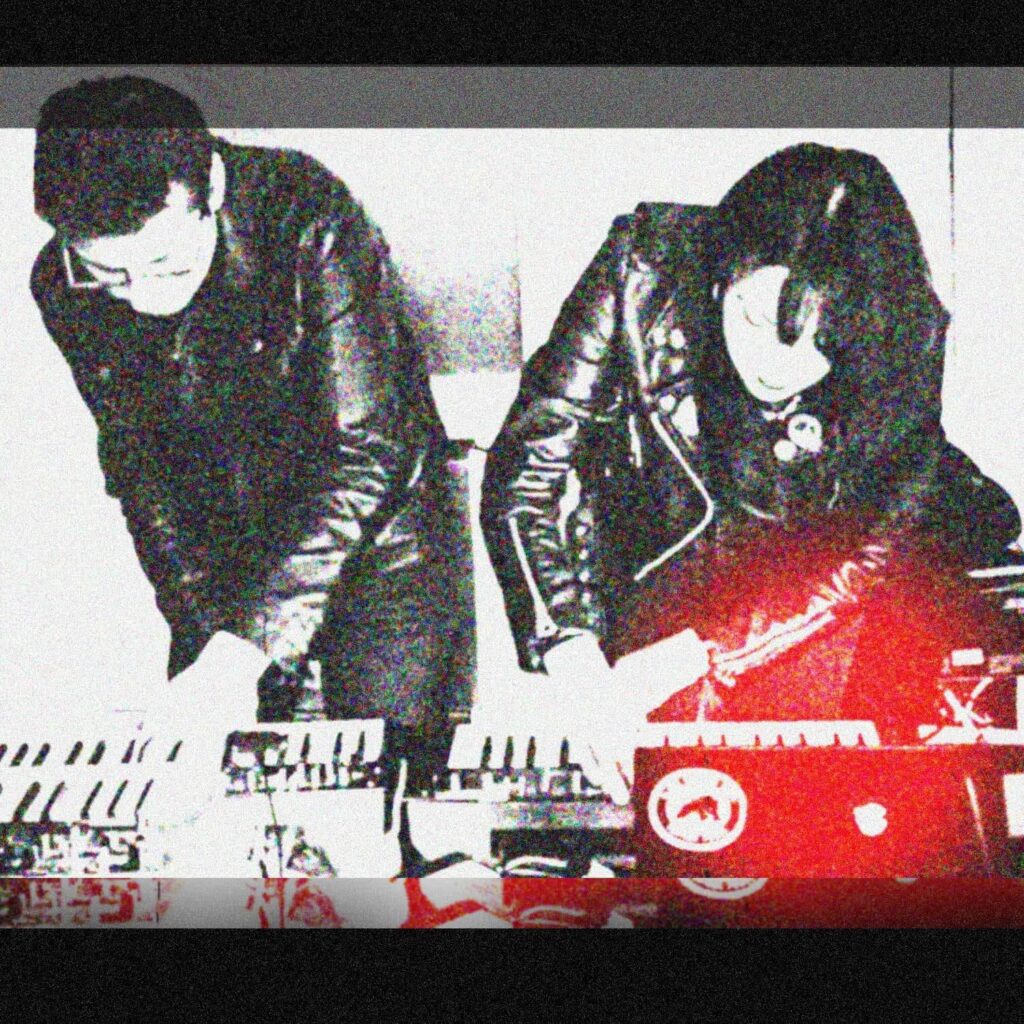
We caught up with the duo behind Spammerheads to talk about their latest tracks, the influence of their surroundings, and why they believe industrial music is still a vital way to speak about the world today.
Lizzie
It’s a pleasure to have you here with us. You’ve just shared “Nothing More (Revisited)” as a free download. Why bring this track back now, and what does this new version mean to you?
Spammerheads
The pleasure is ours, and thank you very much for the invitation!
Well, it’s been a way of thanking everyone who continually supports us by coming to our shows and buying our records. Sometimes we like to get into the studio and tinker with older tracks. Not always, but in this case we were happy with the result.
Lizzie
What has changed in the way you produce or understand music from the original version to this revision?
Spammerheads
Four years have passed, and many things have changed. We still understand music in essence the same way as at the beginning—that hasn’t changed much. However, our way of producing has changed. We’ve learned many things over these four years, and we hope to keep learning. The day we stop being interested in learning, our music will probably stop being interesting too.
Lizzie
In your recent releases there’s a very direct emotional charge. Do you need to live certain experiences in order to write about them?
Spammerheads
For us, art is a way of talking about the things that happen around us and affect us. Our creations are always shaped by our vital and social context. We’re both very sensitive to the problems that affect our surroundings and society in general, and we pour that into our music, which for us is therapeutic.
Lizzie
The Mire Chronicles was born marked by the floods in Valencia. How did that context influence the sound and concept of the album?
Spammerheads
We started working on the album a couple of months before the floods. But when they happened, they shaped the atmosphere, the narrative, and the final sound of the record—of course also the lyrics and the meaning of everything. It became a conceptual album that draws from our own experience and serves as a tribute to all the communities and people who face tragedies like this and move forward with courage and a will to live. What inspired us most was witnessing people’s resilience and strength to carry on, along with the waves of solidarity.
Lizzie
Do you think industrial music and EBM are still a good channel for talking about social reality and personal experiences today?
Spammerheads
Absolutely. In fact, that’s how it was at the beginning. You could find social criticism in bands like DAF, Skinny Puppy, Clock DVA, Cabaret Voltaire, among many others, with lyrics full of black humor and irony. Some of these bands explored topics such as media paranoia, systems of control and domination, the use of technology for social surveillance, violence, urban alienation, etc. For example, Throbbing Gristle used industrial music and performance to address aspects of consumer society and the use of technology and mass media to control the individual. Skinny Puppy denounced animal testing in laboratories, among other issues. This is the side we’re interested in, and we believe these genres should stay outside of trends so they don’t turn into a mere exercise in style and repetition. Our parents and grandparents had to fight hard so that they—and we—could have time and space to dance and have fun. So we understand it’s our duty to defend that time and space.
Lizzie
Your music maintains a strong link to old-school EBM, yet it sounds very current. How do you find the balance between tradition and evolution?
Spammerheads
On the one hand, we listen to a lot of contemporary music, which can influence us to a greater or lesser extent. We also work with current gear—much of it analog, but current nonetheless—and that also contributes to a more modern sound.
On the other hand, we have a certain preference for a sound that isn’t so current or standardized. For us, certain industrial sounds (sometimes abrasive, noisy, and uncomfortable) are fundamental in our productions, where noise itself becomes part of the message. That’s where the more old-school influence in terms of sound comes from. For us, noise is beautiful precisely because it’s the part of sound that resists being tamed. Noise isn’t a flaw—it’s a message. Working with it in our compositions is a challenge that motivates us; we’re attracted to that resistance and complexity.
Perhaps moving within those blurred boundaries between tradition and evolution, sound and noise, order and irregularity is part of the band’s nature.
Lizzie
Which artists or scenes have influenced you the most in this latest stage of the project?
Spammerheads
We’re influenced by many things: old-school EBM, ’70s punk rock, early ’80s synthpunk, industrial music, as well as films, news, and pretty much anything.
We could give an endless list of bands we love and that have influenced us during this period, but to name a few: Nitzer Ebb, The Klinik, Skinny Puppy, Coil, Alien Sex Fiend, Front Line Assembly, Front 242, The Neon Judgement, Clock DVA, The Invincible Spirit, Portion Control, Signal Aout 42, Vomito Negro, A Split-Second, Ministry, and countless ’70s punk bands we adore.
As for newer-generation artists, there are so many we could mention.
Lizzie
You work as a duo. How do you divide creative roles within Spammerheads?
Spammerheads
In reality, we do everything 50/50. Over time, though, we’ve learned what each of us is strongest at in composition and production, so the division of roles is clear at certain stages of the process. Even so, we’re always both present, sharing ideas and trying things out. That’s really the secret, because we’re both very creative, and either of us can find the key—the sound, the melody, or the perfect arrangement for a song.
Lizzie
Do songs tend to be born more from rhythm, concept, or emotion?
Spammerheads
We usually build from rhythm. In that sense, bass riffs are fundamental. But there’s no single method. Sometimes it might start with a melody or a chord sequence, and then we adapt the bass to it. What matters is recognizing the possibilities of what you’re creating and then working carefully on the sound and the exact arrangements it needs. Almost always, it’s the latter that makes the difference—and that’s not inspiration, it’s pure work.
Lizzie
Live, you transmit a very physical energy. How do you adapt your studio tracks to the stage?
Spammerheads
Live shows are very important to us, and we prepare them thoroughly. We don’t always adapt songs in the same way. There are parts where we allow ourselves more improvisation, and others that need to run like clockwork or they wouldn’t work at all. But we believe a live show should have room for everything. We’ve also created arrangements (with vocals, synths, or bass lines) that aren’t on the studio recordings and are played only at our concerts. What matters is that the whole show makes sense, conveys the energy we want to transmit, and offers something different from the studio versions.
Lizzie
You’ve shared bills with historical names in the genre. What does it mean to you to play alongside bands that are part of the DNA of EBM?
Spammerheads
They’ve been very special moments for us, honestly. Just five years ago, when we were starting the project, if someone had told us we’d one day play with Nitzer Ebb or Esplendor Geométrico, we would have burst out laughing. But it happened, and it’s mind-blowing. Experiences we’ll never forget.
Lizzie
How do you currently see the industrial/EBM scene in Spain? Do you feel it’s a particularly fertile moment?
Spammerheads
We think so, and we believe it will keep growing. New projects with a strong industrial and EBM influence keep emerging. And the great thing is that each one is searching for its own sound and way of expression. We think that in the near future many very interesting projects will appear and join the many that already exist, and that effervescence will be fantastic.
Lizzie
Your collaboration with Nightcrawler on “Ghostless” was widely discussed. What does working with other artists bring to you?
Spammerheads
A lot, honestly. It’s something we love, and it pulls us out of our own universe—which is very healthy, especially when working with artists of Nightcrawler’s caliber. It’s an opportunity to learn, and we really value that. We’ve also been lucky to work with very talented artists who later became our friends, such as Nightcrawler, JG Outsider, or Soj.
Lizzie
How important is Bandcamp for you compared to other platforms?
Spammerheads
It’s very important because it allows you to sell your own albums—both digital and physical—along with merch and more. It also lets you stay in contact with the audience that supports you and buys your records, which we really like. That said, it’s not all perfect and there are things that could be improved, but the truth is it’s become a very important tool for artists and labels.
Lizzie
In such a saturated musical context, what do you think truly defines Spammerheads’ identity?
Spammerheads
The band’s DIY spirit. We like to take care of things ourselves, even if they’re imperfect or we make mistakes, or if it means a heavy workload at times. We prefer to handle the image, music videos, composing, mixing, artwork, T-shirt designs, social media, booking, etc., because we like everything surrounding the project to have our personal touch. That said, we’re very open and receptive to doing things differently when collaborating with others, which—as we mentioned before—is always enriching.
Lizzie
Do you see the project as something purely musical, or also as an aesthetic and conceptual statement?
Spammerheads
We come from a generation where music was very important and defined who you were as a person. Depending on whether you listened to punk, heavy metal, or rockabilly, you dressed a certain way and went to certain venues.
So for us, music is a way of understanding life and facing it.
Lizzie
What can we expect from you in 2026: new releases, live shows, changes in direction?
Spammerheads
We’ve got a pretty busy year ahead, to be honest.
Soon, a remix album of our latest record The Mire Chronicles will be released, featuring remixes by Years of Denial, Velvet May, LFT, Scannoir, Israel Padilla, and Black Dot, to be released by Banshees Records.
There’s also our collaboration on the upcoming album by Soj, which Soil Records will release soon.
We also have a very cool project in the works for after the summer that we can’t talk about yet.
And then there are the live shows, which we’ll be announcing shortly. We can already say that we’ll be leaving Spain for the first time and visiting France and Italy.
Lizzie
For those who haven’t listened to you yet: why should they start now with Spammerheads, and which track would you recommend?
Spammerheads
That’s a hard one… well, we’ll give you a bunch of good reasons: because you’ll find songs about turning frustration into energy and using humor as a weapon; anti-romantic songs for walking alone and turning love into an act of courage; choruses full of feeling to sing in the shower; intense tracks that will strengthen your mind while you dance anytime, anywhere; and frenetic rhythms that will remind you that life isn’t just about working, paying taxes, and dying. They’ll remind you that life is meant to be danced.
Choosing a song is even harder, but we’d say that any track from The Mire Chronicles or Disclaimer would be a good place to start.
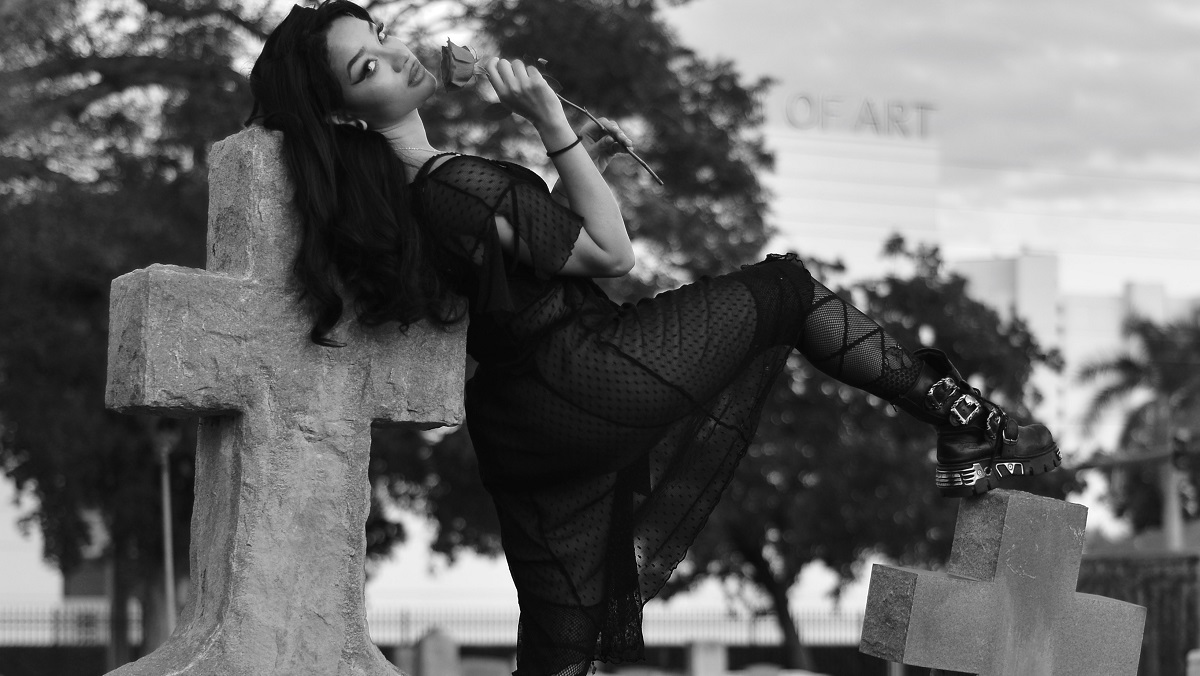
🇪🇸🇦🇷Visual artist specialised in artistic makeup, tattooing, and micropigmentation. Her work, shaped by a gothic and symbolic sensibility, unites ritual and beauty in exploring the body as a medium for profound expression.
As a writer She contribues to music, and She’s currently working on her first novel.



























0 Comments