
Close
by Lucy Harker | Apr 22, 2026
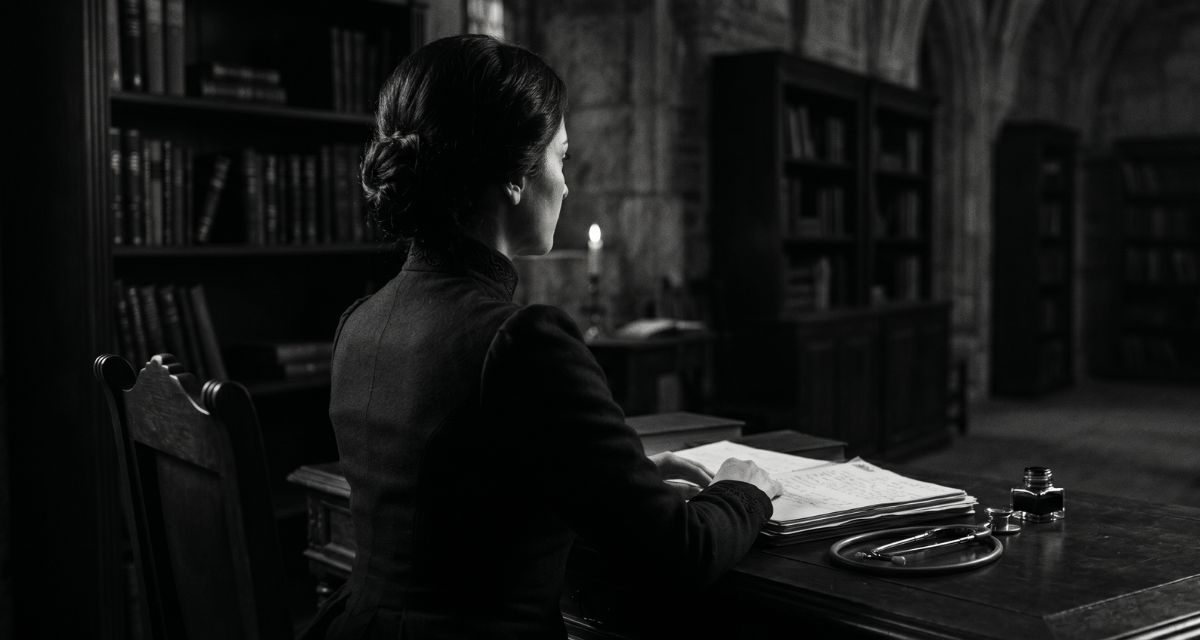
The early 20th-century Ottoman Empire was a collapsing titan. Within this decay, the medical field remained a fortified bunker—a cold monolith reserved exclusively for men. Women were culturally and legally erased from the halls of the Imperial School of Medicine, making the pursuit of a medical career an act of high-stakes institutional defiance, a solitary siege against a world that preferred her absence. Safiye Ali entered this fractured landscape as the Empire transitioned into a Republic, establishing her power through a quiet, rhythmic refusal to wait for a permission that was never destined to arrive.
When Istanbul University slammed its doors, Ali bypassed the local bureaucracy and moved to Germany in 1916. While Europe was physically tearing itself apart, she was buried in the University of Würzburg, focused on the lethal, quiet mysteries of infant meningitis. She graduated with honors into a world that possessed no blueprint for her existence. Upon her return to Istanbul in 1923, she opened a clinic in the Cağaloğlu district, where she immediately collided with the visceral reality of professional prejudice. Male patients scanned her office with a hollow skepticism, demanding to see “the real doctor” as if her presence were merely an administrative ghost. They attempted to diminish her brilliance by offering fragments of the standard fee, treating her expertise as a discounted novelty. Ali met this hostility with technical precision and a cold refusal to lower her rates, eventually forcing the community to acknowledge her clinical results over the weight of their own stagnation.
Her impact soon bled from the examination room to the lecture hall, as she became the first woman to teach medicine in Turkey. By lecturing at the American College’s medical department for girls, she bridged the gap between being a solitary pioneer and crafting a new lineage of female professionals. This role was a direct assault on the institutional gatekeeping that had sought to bury her. Outside the classroom, she assumed command of Süt Damlası, a network dedicated to the fragile survival of infants. In an era where infant mortality was a plague fueled by neglect, she managed the distribution of sterilized milk with a military-grade grit, ensuring that life had a foothold in the city’s poorest, dampest sectors. Her authority eventually broke national borders at the 1923 International Medical Women’s Congress in London. As the sole representative from a Muslim-majority nation, she faced a room of skeptics not with symbolic platitudes, but with a data-heavy report that left no room for condescension. She exited the congress as an international peer, a global authority recognized in her own right.
Safiye Ali’s story remains empowering because it strips away the “first woman” fluff and focuses on competence as a sharp, undeniable weapon. While the legal barriers to education have largely dissolved, the “boys’ club” mentality remains a persistent shadow in high-pressure industries. Her legacy serves as a masterclass in navigating the modern equivalents of the “Where is the doctor?” moment. She proves that when the world refuses to grant a seat at the table, the most effective response is to build your own clinic and wait for the world to realize it needs your expertise more than you need its approval. She was never a subject of history; she was the architect of it.





















0 Comments