
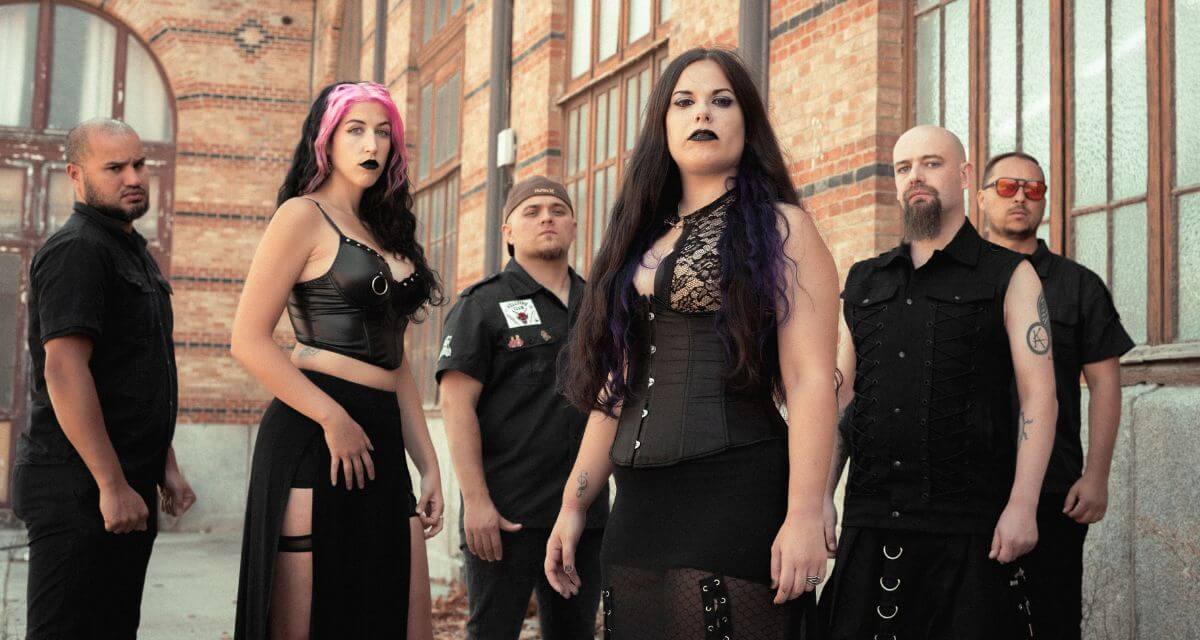
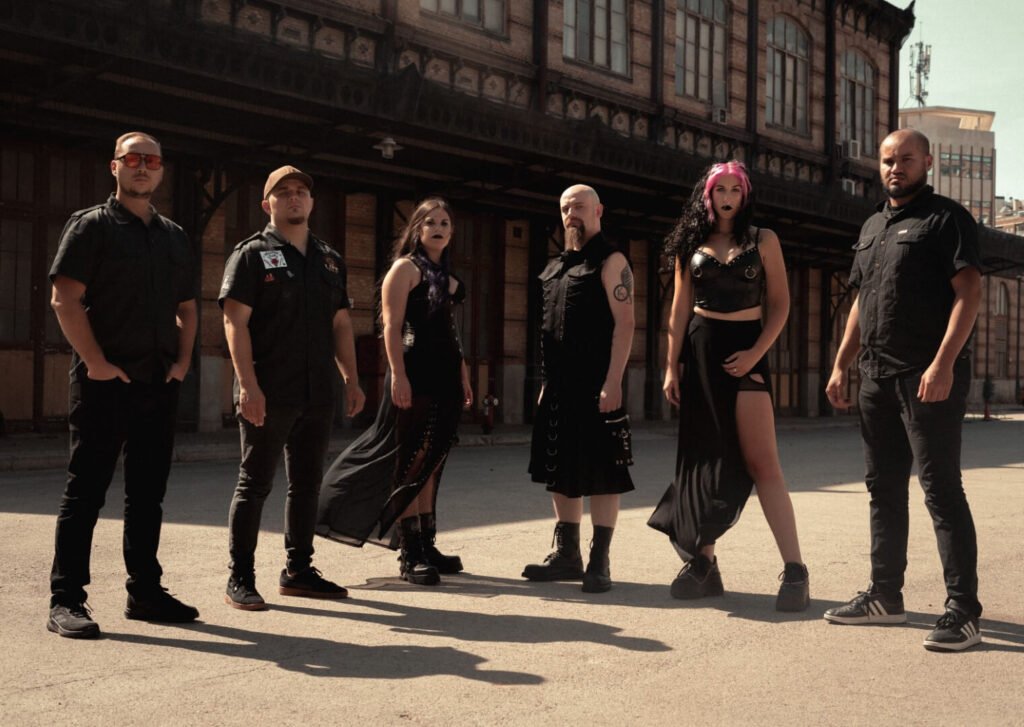
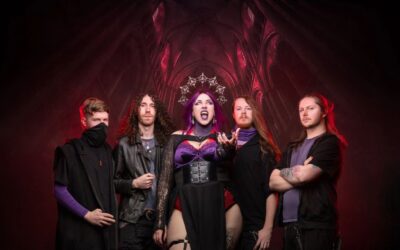
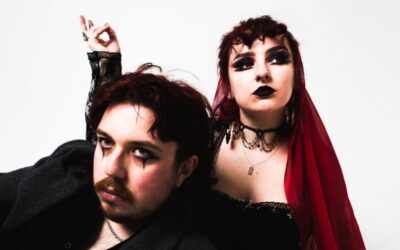
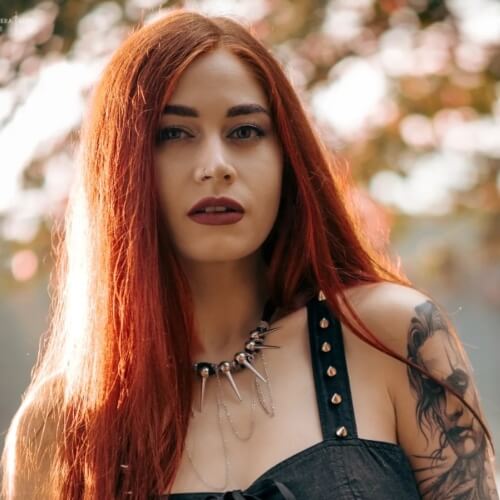
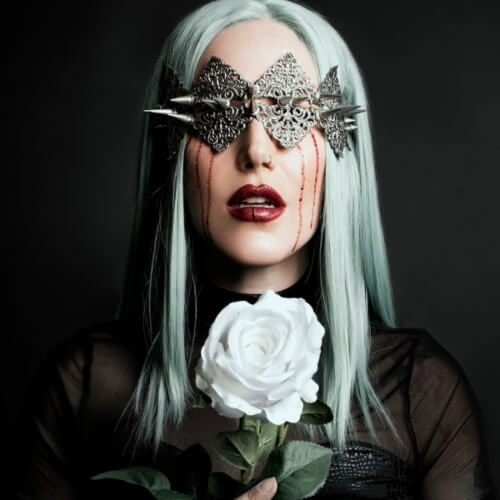
Melodic death metal band Ancient Settlers marked an exciting new chapter with the release of their EP, “Autumnus (Revisited),” which introduced their new vocalists, Noelia Fernández Jiménez and Nia Creak. We had the pleasure of talking with them to discuss their journey so far with the new band and many other interesting topics.
Reuel
Hello! I’m very happy to chat with you. How are you doing?
Noelia
Hello! I’m doing great, thank you. I’m really excited to be here and to share a bit more about Autumnus (Revisited) and Ancient Settlers.
Nia
Hello! I’m fine, hope you too.
Reuel
I’m fine, thank you! How did it feel to finally release the revisited Autumnus after joining Ancient Settlers earlier this year?
Noelia
Releasing the revisited version of Autumnus felt incredible. Joining Ancient Settlers earlier this year was already a really nice moment for me, and revisiting this EP gave me the chance to truly connect with the band’s essence. It was both exciting and challenging—almost like rediscovering the EP from the inside out.
Nia
Honestly, it all felt rushed and I didn’t have time to enjoy something as important as this deserves, but I realized how exciting it was when I heard my voice on national radio; it was a dream.
Reuel
How did you approach adding your own vocal identity to the reworked tracks?
Noelia
When the process started, I wanted to go all-in and showcase the full range of my distorted vocal techniques—deep, resonant lows, high-pitched fry screams, solid mid-range growls, even some tunnel-throat nasty textures, as an extreme metal vocal coach, I felt it was important to push these techniques and really demonstrate what I can do. However, as we refined the tracks, some of these ideas didn’t end up working in the songs, the focus gradually shifted toward prioritizing emotional articulation within the harsh vocals, emphasizing expressiveness and phrasing over purely technical display. What I didn’t expect was that I’d end up recording clean vocals in two of the three choruses alongside Nia, especially considering that my main strength has always been extreme vocals. It was an unexpected turn, but it opened up a new dimension for me in how I can contribute to the band’s overall sound.
Nia
I won’t lie, it was difficult. As a singing teacher and future speech therapist, I always tell my students that you have to adapt the song to the voice, not the other way around. It’s always a lot of work to adapt to something that’s already been done, although we had quite a bit of freedom to showcase our strengths and explore ourselves as singers. The voice is identity, but the more you work on it, the more resources you can offer yourself, the public, and your colleagues.
Reuel
Were there any moments during recording where you felt a song truly transformed from the original?
Noelia
There were definitely moments where the songs felt completely transformed, but it wasn’t due to just one element—it was a combination of factors. The change in the tuning alone gave the tracks a much heavier, more crushing foundation compared to the originals. Then you have the melodic changes in the choruses, especially in Die Around Me, which now features an entirely new melodic chorus. And on top of that, the shift from Antony Hämäläinen’s hardcore-style vocals in the verses to the blend of Nia’s fry screams and my own added a completely different dynamic. All these elements together reshaped the songs in a really powerful way.
Nia
Definitely! As Noe says, we’ve moved away from the hardcore style and approached the themes in a more melodeath way, even the rhythmic phrasing is changed at various points in the three songs.
Reuel
Can you share a personal favorite lyric or moment from the release and why it resonates with you?
Noelia
My personal favorite moment from the release is the line ‘Wrecking and crumbling a monument restored.’ In the context of the song, it carries this haunting duality—destruction and renewal happening at the same time. But on a personal level, it resonates because it mirrors the emotional process of rebuilding parts of yourself while letting go of what no longer works. That tension between collapse and rebirth is something I deeply connect with as a vocalist and as a person.
Nia
My favorite song is Diamond Eyes; every verse makes me feel like I’m floating, and when I sing the chorus that actually says “floating like a ghost in the sky…” I’m already flying. Every part of that song makes me feel like nothing bad can happen to me while I’m singing.
Reuel
What bands did you grow up listening to that you felt inspired by?
Noelia
I grew up listening to a wide range of metal bands that shaped the way I perform as a vocalist. The melodic and progressive styles of Amorphis, Dark Tranquillity, Arch Enemy, Scar Symmetry, Omnium Gatherum, Insomnium, Into Eternity, Death, The Agonist, and Jinjer taught me how to combine emotion and heaviness. Symphonic bands like Epica, Nightwish, Within Temptation, Delain, Shade Empire, Therion, Dimmu Borgir, and Septicflesh inspired my love for orchestral grandeur, while the modern aggression of Parkway Drive, Architects, Killswitch Engage, I Prevail, Spiritbox, Thy Art Is Murder, Monochromatic Black, Make Them Suffer, Shadow of Intent, Annisokay, and Bad Omens sharpened my intensity. I also drew from darker and more atmospheric bands such as Behemoth, Dark Funeral, Belphegor, Rotting Christ, Cult of Luna, Harakiri for the Sky, Alcest, Swallow the Sun, Draconian, Oceans of Slumber, and Novembers Doom. But also, the raw power of Carcass, Hypocrisy, Deicide, Bolt Thrower, and Kataklysm, combined with the classic energy of Iron Maiden, Judas Priest, Warcry, Doro Pesch, and Unleash the Archers, grounded my style, while the folk-metal spirit of Ensiferum, Dalriada, and Finntroll added an extra layer of melody and energy.
But, my inspirations extend beyond metal. Gothic Rock icons like The Cure, Bauhaus, The Sisters of Mercy, and The 69 Eyes; folk artists such as Faun, Santiano, Omnia, Danheim, and Heilung; and dark electronic acts like Carpenter Brut, Perturbator, Gost, Depeche Mode, Omnimar, Front 242, and The Crüxshadows have all influenced the way I perform. Even pop powerhouses like Anastacia, Lady Gaga, Jessie J, and Pink have shaped how I think about emotion and stage presence.
I believe inspiration can come from any genre. Staying open-minded—while I identify myself as an extreme metal vocalist—has allowed me to grow, experiment, and develop a dynamic, expressive identity.
Nia
I grew up listening to a lot of Spanish music: Nino Bravo, Luz Casal, Miguel Ríos, Marisol… and of course all the Disney musicals. That led me to work on my voice from a more dramatic perspective. Later, I started studying singing and acting, which further developed my dramatic voice. When I started listening to metal around age 12, I listened to what was popular at the time: nu metal, power metal, and classic heavy metal. I think I didn’t start listening to metalcore and death metal until I was 16. All that background—metal, musicals, traditional Spanish music—has shaped me into who I am and continues to motivate me to keep developing my skills.
Reuel
What are your feelings about the way women are represented in music today, and what do you think can be done to promote more inclusivity and support for female musicians?
Noelia
That’s why spaces like Rockin’ Ladies are so important to me—I’m proud to be part of this association that supports women in rock and metal. For me, it’s about making it clear that these spaces belong to us just as much as they belong to men. Women have every right to perform, create, and lead in music, and being visible and active. Networks like Rockin’ Ladies helps reinforce that presence and claim our space in the scene. It’s not just about having women on stage it’s also about having the same opportunities behind the scenes as producers, songwriters, managers, technical roles like sound and lighting… and making sure we are treated with respect, It’s about creating safe environments that are free from sexual harassment, discrimination, and bias— for women, members of the LGBT community, racialized people, and individuals with physical or mental disabilities. For me, it’s not about promoting women differently or more than anyone else—it’s about having the same opportunities as cis men, breaking the glass ceilings that still persist today, so everyone can perform freely, and the only way I see is being vocal about it, there’s people who says that society it’s polarized, what they don’t realize is that society has always been polarized, the ones with privileges and the ones that don’t, the only difference is that we are tired of being mistreated and we won’t remain silent anymore”.
Nia
Things have changed a lot, but it’s true that there’s still so much to gain. Now, with Noe, I have a place where I can share and be myself. I always am, don’t get me wrong, but with a girl by my side, like sisters on stage, it’s gratifying to know I have support. However, it’s sad how we’re still objectified or treated as something basic when we’re professionals like everyone else. I don’t think there should be special regulations in the music industry; I think the problem is one of social policy and the bad habits of many people who don’t want to accept that things are changing.
Reuel
Thank you for your time, and for this interview! Is there anything else you’d like to add?
Noelia
Thank you so much for having us! I just want to say that I’m excited for what’s coming next with the band—I can’t wait for everyone to hear it!
Nia
Come and see us on stage, I’m sure you’ll like it! Thank you for giving us this space to chat.





0 Comments