
Close
by Lucy Harker | Oct 8, 2026
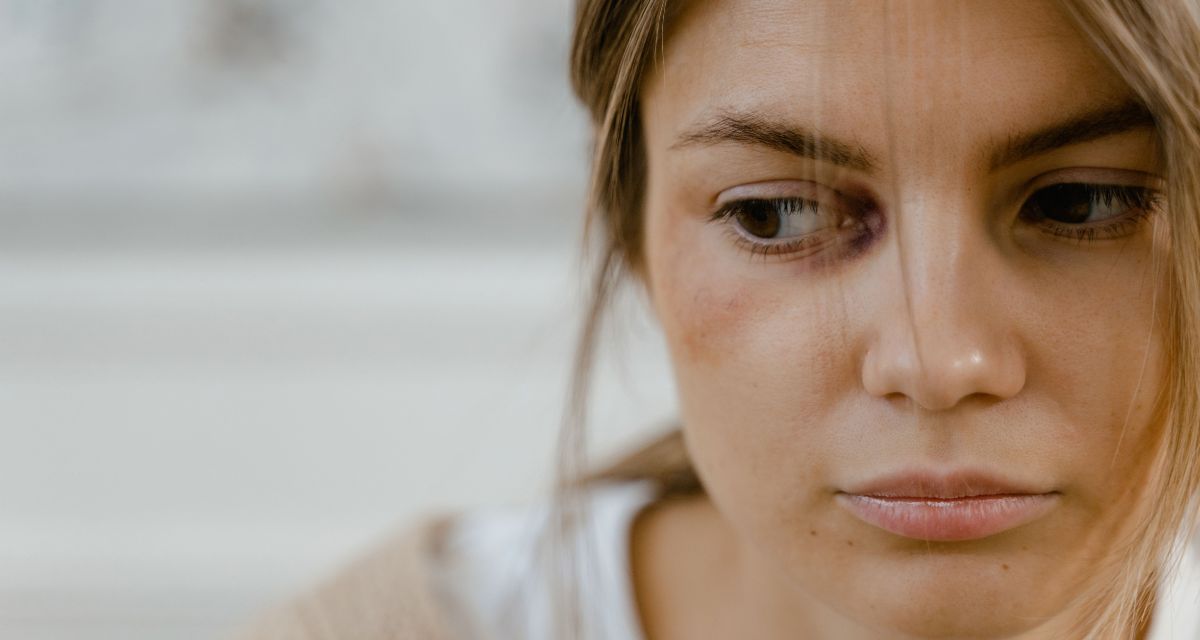
Usually, She’s In Charge tells the story of one woman who found herself up against a system that had already decided what she was allowed to do. Over the past months, we have covered doctors, queens, warriors, artists, and activists who stood against empires, courts, and traditions that told them where they belonged. This week, however, the story is bigger than one woman.
October is Domestic Violence Awareness Month. So this week, instead of looking at one woman from the past, we are looking at something that is still happening now: the violence women face in their own homes, the systems that can leave them without adequate protection, and the women working to change those systems.
We are often taught to think of danger as something that comes from outside. A stranger on a dark street. An unfamiliar person following you home. A place you should know better than to walk through alone.
For many women, the person they need to fear is not a stranger. Sometimes, it is the person already inside the house.
In 2023, approximately 51,100 women and girls around the world were killed by an intimate partner or another family member. That is roughly 140 women and girls every day. The home, which is usually treated as the most obvious place of safety, can also be where some of the worst violence takes place.
The wider picture is just as disturbing. According to the World Health Organization’s latest global estimates, nearly one in three women, around 840 million worldwide, have experienced physical and/or sexual violence by an intimate partner or sexual violence by someone else during their lifetime. Around one in four women who have ever been in a relationship have experienced physical and/or sexual violence from a current or former male intimate partner.
The statistics measure different forms of violence, but they point to the same uncomfortable reality. Domestic violence is not a rare problem affecting a handful of families. It is part of a global pattern of violence against women.
The law can give women important protection. It can also leave some very large holes.
The World Bank’s Women, Business and the Law research found that only 104 of 190 economies had comprehensive laws addressing domestic violence. Under its safety framework, comprehensive protection should cover physical, sexual, psychological or emotional, and economic abuse. It should also include criminal sanctions and protection orders.
That distinction matters because domestic abuse does not always look like a single physical assault. It can involve threats, isolation, financial control, coercion, and other forms of abuse that are harder to identify from the outside. A legal system may recognize some of these things while leaving others poorly addressed.
The gaps become even larger when other forms of violence and discrimination are included. The World Bank found that more than three billion women live in economies providing less than half of the legal protections covered by its broader safety framework, which includes child marriage, sexual harassment, domestic violence, and femicide. Only a small fraction of women live in countries with full legal protection across all four areas.
Then there is the problem of enforcement.
A law on paper does not necessarily translate into protection in real life. Police, courts, shelters, healthcare services, legal aid, and other institutions all affect whether a woman can actually use the rights the law is supposed to give her.
Having a protection order available is one thing. Being able to obtain one when you need it is another.
Whenever domestic violence is discussed, the same question tends to appear.
“Why doesn’t she just leave?”
It sounds like a simple solution because it fits neatly into a sentence. Real life is less cooperative.
Leaving can mean finding somewhere safe to stay, having enough money to survive, arranging care for children, finding legal assistance, and figuring out what happens when the person who has been controlling you realizes you are trying to get away. For some women, leaving can also increase the immediate risk of violence.
Money is one of the less visible parts of the problem.
Financial abuse can include taking a partner’s wages, controlling bank accounts, preventing her from working, damaging her credit, creating debt in her name, or restricting her access to money. Economic dependence can become another way of making leaving difficult.
The resources available to prevent violence against women remain nowhere near the scale of the problem. In 2022, only 0.2% of global development aid went toward programmes focused on preventing violence against women.
A significant amount of practical support therefore comes from organizations that receive considerably less attention than governments passing laws. Women-led and grassroots organizations provide legal assistance, emergency shelter, financial support, counselling, referrals, and other services that can give survivors options when they have very few.
In Lebanon, for example, UN Women has reported on women-led organizations providing protection services, shelter, legal support, and other assistance to women and girls during the country’s overlapping crises. In 2025, more than 8,000 women and girls at risk of or surviving sexual and gender-based violence accessed survivor-centred protection services through programmes supported by UN Women and its partners.
On paper, these services can sound rather ordinary. A lawyer. A safe place to sleep. Emergency money. A referral to another service.
For someone trapped in an abusive home, none of those things are ordinary.
Women have been challenging these systems for generations.
In 19th-century Britain, married women had severe legal restrictions on their rights to their children, property, and personal lives. Caroline Norton encountered those restrictions while dealing with an abusive marriage and eventually turned her own legal struggle into a campaign for reform.
Norton became one of the persistent advocates for changing the legal position of women within marriage. Her campaigning contributed to the Custody of Infants Act 1839, which gave some mothers the right to petition for custody of young children. She continued campaigning for changes to divorce law and the rights of married women, becoming part of a much longer process of legal reform.
The changes did not arrive all at once.
The Matrimonial Causes Act 1857 transferred divorce proceedings from Parliament to a new civil court and made divorce more accessible, although husbands and wives continued to be treated differently under the law. The Matrimonial Causes Act 1878 later gave women experiencing violence from their husbands a route to obtain a protection order and gave courts powers relating to the custody of their children.
Norton did not single-handedly create modern protections for women leaving abusive marriages. Her contribution was more specific. She encountered a legal system that gave women very little room to control their own circumstances, and she kept making the case that those rules needed to change.
More than a century later, another woman would confront a different legal system after it failed to properly address violence against her.
Maria da Penha Maia Fernandes survived two attempts by her husband to kill her. One of the attacks left her paraplegic. Her case then spent years moving through Brazil’s justice system without a meaningful resolution.
Maria da Penha and women’s rights advocates eventually took the case to the Inter-American Commission on Human Rights. In 2001, the Commission found Brazil responsible for violations connected to the delay and failure of justice in her case.
The decision increased pressure for legal reform. In 2006, Brazil adopted the Maria da Penha Law, which became an important part of the country’s legal framework for preventing and responding to domestic violence.
The cases of Caroline Norton and Maria da Penha were separated by more than a century and took place in very different legal systems. Yet both show what can happen when a woman’s experience is taken beyond the limits of a private dispute and turned into an argument about the system itself.
New laws do not make the work disappear.
Women continue working in shelters, legal clinics, crisis centres, community organizations, research institutions, and women’s rights groups. Some campaign for stronger legislation. Others help survivors navigate the laws already in place. Some work on economic independence because having an income and control over your own money can determine whether leaving is actually possible.
Much of this work is carried out by women-led organizations operating with limited resources. UN Women has highlighted the role of women’s rights organizations in preventing violence, supporting survivors, and developing responses based on the needs of the communities they serve.
Some of the work is easy to see. A campaign for a new law. A protest. A public legal case.
Other parts are almost invisible.
A woman finding a lawyer. A safe place being arranged. Emergency money being provided. A case being documented. Someone explaining which service to contact. Someone making sure a woman understands that what is happening to her is abuse and that she has somewhere to turn.
These things rarely become famous stories.
They can still change the course of someone’s life.
Domestic violence is not limited to physical attacks. Isolation, intimidation, financial control, inadequate legal protection, and a lack of resources can all make it harder for a woman to escape an abusive situation.
That is why telling women to leave is not enough. Leaving requires somewhere to go. It may require money, legal support, childcare, healthcare, and protection. It also requires institutions that actually function when a woman finally decides to ask for help.
Caroline Norton challenged laws that restricted mothers in 19th-century Britain. Maria da Penha challenged a justice system that had failed to bring her case to a meaningful conclusion. Women around the world continue challenging laws, institutions, and circumstances that leave survivors without adequate protection.
They are not all fighting the same battle. Some campaign for legal reform. Some represent survivors in court. Some run shelters. Some organize communities. Some help women become financially independent. Some simply make sure that a woman who has decided to leave has somewhere to go.
That is the less visible side of changing a system.
She’s In Charge has usually followed one woman standing in front of a rule, a court, a government, or a tradition and deciding that she will not accept it. This week, there are millions of women involved in that struggle in different ways, often without anyone knowing their names.
Some are changing laws. Some are helping women survive the laws that have not changed yet.
And some are simply making sure that when a woman finally decides she has had enough, there is a door somewhere that she can open.























0 Comments