
Close
by Lucy Harker | Nov 20, 2026
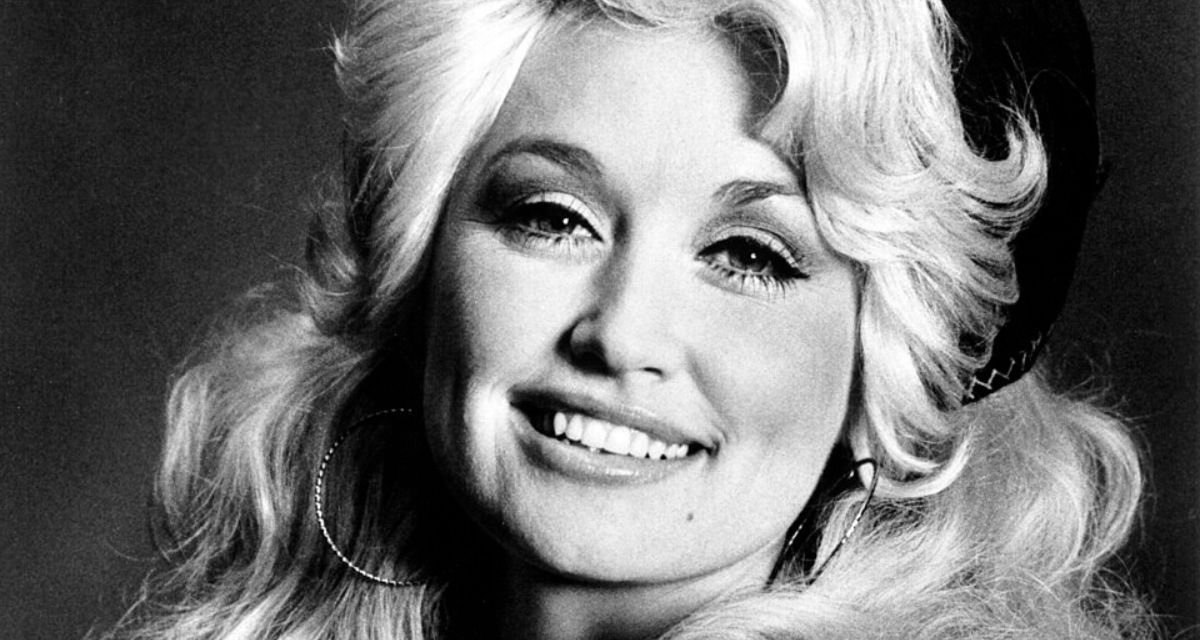
When Dolly Parton was a little girl, there was a woman in town whom the adults called the “town tramp.” She wore tight skirts, high heels, bright makeup, and had big blonde hair. Dolly didn’t understand what the adults meant. She simply thought the woman looked wonderful. Years later, when she was building a music career, people advised her to tone down her appearance if she wanted to be taken seriously. Apparently, the hair and makeup were making it difficult for them to concentrate on her talent. Dolly wasn’t particularly interested in their fashion advice. She liked looking that way, and she intended to keep doing it. The music business would have to get used to her.
Dolly Rebecca Parton was born on January 19, 1946, in Locust Ridge, Tennessee. She was the fourth of twelve children, raised in a family that had very little money but plenty of music. Her mother, Avie Lee, once made her a coat from scraps of fabric because the family couldn’t afford a new one. Dolly was proud of it, until she wore it to school and the other children made fun of her. Years later, she turned that memory into “Coat of Many Colors,” one of her most personal songs. She remembered the love her mother had put into making the coat, as well as the humiliation of wearing it to school. Both had stayed with her.
Dolly started singing as a child, appearing on local radio and television before she was even a teenager. In 1964, shortly after graduating from high school, she moved to Nashville. Three years later, she joined The Porter Wagoner Show, a popular country music television program that introduced her to a much larger audience. Porter Wagoner was already an established star, and their partnership helped Dolly build her career. But she had ambitions of her own. She was writing songs, recording solo material, and gradually becoming a star in her own right. In 1974, after seven years working together, Dolly decided to leave the show. Their professional relationship had become increasingly difficult, and the separation wasn’t easy. She wrote “I Will Always Love You” as a farewell to Porter. The song was considerably more peaceful than the circumstances surrounding their departure.
That song would eventually become the subject of one of Dolly’s most difficult business decisions. Elvis Presley wanted to record it, and Dolly was understandably thrilled. Unfortunately, his manager, Colonel Tom Parker, had other ideas about how the arrangement should work. He wanted at least half the song’s publishing rights. Dolly refused. She later admitted that she cried over losing the opportunity to have Elvis record her music. He was one of the biggest stars in the world, and hearing him sing something she’d written would have meant a great deal to her. But those publishing rights were part of her livelihood, and she wasn’t willing to surrender them. Elvis never recorded the song. Dolly had made her decision, although it would be years before she discovered just how much that decision was worth.
By the end of the 1970s, Dolly was enjoying considerable success beyond traditional country music. Her songs were reaching pop audiences, and Hollywood came calling. In 1980, she made her film debut alongside Jane Fonda and Lily Tomlin in 9 to 5, a comedy about three working women who have had quite enough of their sexist boss. Dolly played Doralee Rhodes, a secretary whose boss spreads rumors about having an affair with her. The rumors make her colleagues distrust her, while the man responsible carries on with his day. Dolly also wrote and performed the title song, which became one of her biggest hits. Its cheerful melody accompanied lyrics about exhausting workdays, lousy pay, and bosses who treated their employees like servants. The film was a commercial success, and Dolly’s acting career was underway.
Her appearance remained a favorite subject for interviewers. There was always another question about the wigs, the makeup, or the clothes. Dolly generally answered with a joke, often at her own expense. She had created an image so recognizable that people could imitate her with a blonde wig and a handful of rhinestones. But some seemed to mistake the exaggerated appearance for a lack of intelligence. She was managing her career, writing songs, negotiating business deals, and protecting her publishing rights. Nobody had forced her to wear the wigs, either. She liked them. That should have been a sufficient explanation.
In 1986, Dolly became a partner in Silver Dollar City, a theme park in Pigeon Forge, Tennessee, which reopened under the name Dollywood. It was located near the mountains where she’d grown up and brought employment and tourism opportunities to the region. The park expanded over the following decades, eventually becoming one of Tennessee’s major attractions. Dolly had left home for Nashville at eighteen. Now she was investing in businesses that employed people near the place where she’d grown up. And she had put her name on an entire amusement park, which was hardly the sort of thing someone hoping to keep a low profile would do.
Then came 1992. Whitney Houston recorded “I Will Always Love You” for the soundtrack of The Bodyguard, and her version became an enormous international success. The song Dolly had refused to surrender to Elvis’s management was now reaching millions of listeners around the world. Nearly two decades had passed since that conversation with Colonel Tom Parker. Dolly still held the publishing rights she’d fought to keep, and Houston’s recording brought her substantial royalties. Of course, none of this had been certain when Elvis first expressed interest in the song. At the time, saying no meant losing the chance to have him record it. She’d understood that perfectly well.
In 1995, Dolly established the Imagination Library in Sevier County, Tennessee. The idea was to send free books to young children, regardless of their family’s income, encouraging them to read from an early age. The first books were distributed in 1996. Her father, Robert Lee Parton, had never learned to read or write, something Dolly often discussed when explaining why the project mattered to her. He had worked hard throughout his life, but the education he’d missed as a child remained something she wanted other children to have. The program eventually expanded far beyond Tennessee, reaching families in several countries and distributing hundreds of millions of books. Dolly had grown up knowing what it meant to go without things other families took for granted. She wanted children to have books at home, whether their parents could afford to buy them or not.
Dolly Parton died on August 25, 2026, at the age of eighty. Her career had lasted more than six decades, leaving behind an enormous collection of songs, films, business ventures, and charitable work. She’d spent much of her life being asked about her appearance, often by people who seemed far more interested in her hair than in what she had accomplished. Dolly generally laughed along. She understood the joke, and she’d been making plenty of her own for years. But when it came to her music, she knew exactly what belonged to her. Not even the chance to hear Elvis Presley sing her song was worth giving up half her publishing rights.














0 Comments