
Close
by Lucy Harker | Sep 9, 2026
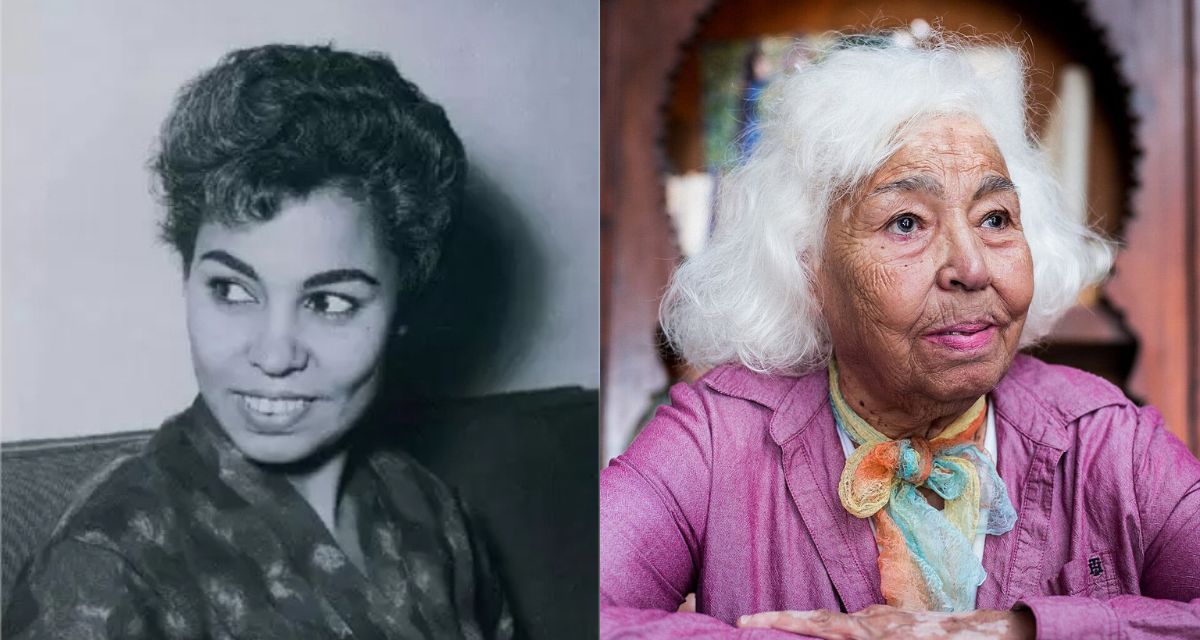
It takes a certain kind of courage to turn against the system that gave you your career. Criticizing something from the outside is one thing. Doing it when you have a respected position inside that system is another. You know exactly what you could lose, and you also know that the people you are criticizing have the power to take it from you.
That was the position Nawal El Saadawi found herself in.
El Saadawi was a physician and psychiatrist who eventually became Egypt’s Director of Public Health. Through her work, she saw how political and social attitudes toward women affected their bodies and their lives. She also knew this subject personally. As a child, she had undergone female genital mutilation, so this was never just another medical issue to her. It was something she had lived through herself.
She could have kept her head down. She had built a successful career and had reached a position where most people would have thought twice before putting everything at risk. Instead, she used her position as a doctor to talk about things the people around her did not want discussed.
In 1972, she published Women and Sex. The book openly addressed female genital mutilation, patriarchy, and the religious ideas used to justify the control of women. It was not exactly the kind of book that would make the Egyptian establishment happy, and they made sure she understood that.
El Saadawi was fired from her position as Director of Public Health. She was also removed as chief editor of a medical journal, and her books were banned. The government had taken away the professional life she had worked for. Perhaps they expected that losing all of this would make her reconsider what she was doing.
It didn’t.
Without her government position, she kept writing and found other ways to reach people. During the 1970s, she published fiction and nonfiction, including Woman at Point Zero, which brought the experiences of Arab women to readers far beyond Egypt. She also became involved in organizations working on human rights and women’s issues. She co-founded the Egyptian Association for Human Rights, established the Health Education Association, worked as an advisor on women’s programs for the United Nations, and later founded the Arab Women’s Solidarity Association.
She also started an independent feminist magazine. That part of her work matters because El Saadawi was not only interested in saying what she thought. She wanted other women to have somewhere to say what they thought too.
Then came 1981. President Anwar Sadat’s government was carrying out a crackdown on political opponents, and El Saadawi was among those arrested. She was sent to Qanatir Women’s Prison with other political dissidents. The authorities knew she was a writer, so they made sure she had no pen or paper. This is where her story starts to sound almost unbelievable.
One of the prisoners, a sex worker, managed to get hold of a black eyebrow pencil and smuggle it into the prison. El Saadawi used it to write Memoirs from the Women’s Prison. She wrote the book on pieces of toilet paper and kept the pages hidden in her cell.
I keep coming back to that detail because there is something strangely human about it. After everything that had happened, it came down to an eyebrow pencil and toilet paper. There was no proper desk, no typewriter, no comfortable writing room. Just a prisoner who wanted to write and another prisoner who had managed to get her something she could write with.
The government had already taken away her job. Her books had been banned. Now she was in prison and they had even taken away her pen. And still she wrote.
After Sadat was assassinated, El Saadawi was released, but being free did not mean that she was left alone. She received death threats from extremists, faced legal action on charges of apostasy, and was eventually forced into exile. She continued writing and speaking, though, and never withdrew the things she had said to make herself safer.
She also kept returning to Egypt. In 2011, at the age of 80, she joined protesters in Tahrir Square during the Egyptian Revolution. By that point, she had been fighting these battles for decades. She had already been fired, censored, imprisoned, threatened, and forced into exile. Yet when a new generation took to the streets, she went there too.
Nawal El Saadawi died in 2021 at the age of 89. She spent most of her adult life making powerful people uncomfortable, and she never seemed particularly interested in learning how to stop.
That is probably what I find most interesting about her story. Women are often encouraged to think of success as something that has to be carefully protected. Get the good job. Build the reputation. Don’t cause trouble. Don’t make the people above you uncomfortable. Once you have something, hold on to it. El Saadawi did almost the opposite.
She had a prestigious medical career and risked it by writing about women. When the government took that career away, she kept writing. When her books were banned, she found other ways to reach people. When she was imprisoned and denied a pen, she wrote with an eyebrow pencil on toilet paper.
There is something almost funny about how badly that plan failed. They had tried to make her powerless, and she was sitting in a prison cell writing a book with a piece of makeup.
She could have made things easier for herself at many points in her life. She could have softened her words. She could have stayed quiet long enough to keep her position. She could have decided that exile was a good reason to stop looking back.
She didn’t. And maybe that is the part of Nawal El Saadawi’s story worth remembering. Not that she was fearless, because she was human and fear is part of being human. It is that fear never became a good enough reason for her to stop saying what she believed.
They could take her position. They could ban her books. They could put her in prison and take away her pen. She still found something to write with.























0 Comments