
Close
by Lucy Harker | Nov 28, 2026
Feminism has some rather unusual ambassadors. They would be deeply offended to be called that, of course, and would probably record a two-hour podcast explaining why. But there is something wonderfully ridiculous about watching a woman exercise her rights, independence and authority while complaining about the movement that fought for her rights, independence and authority.
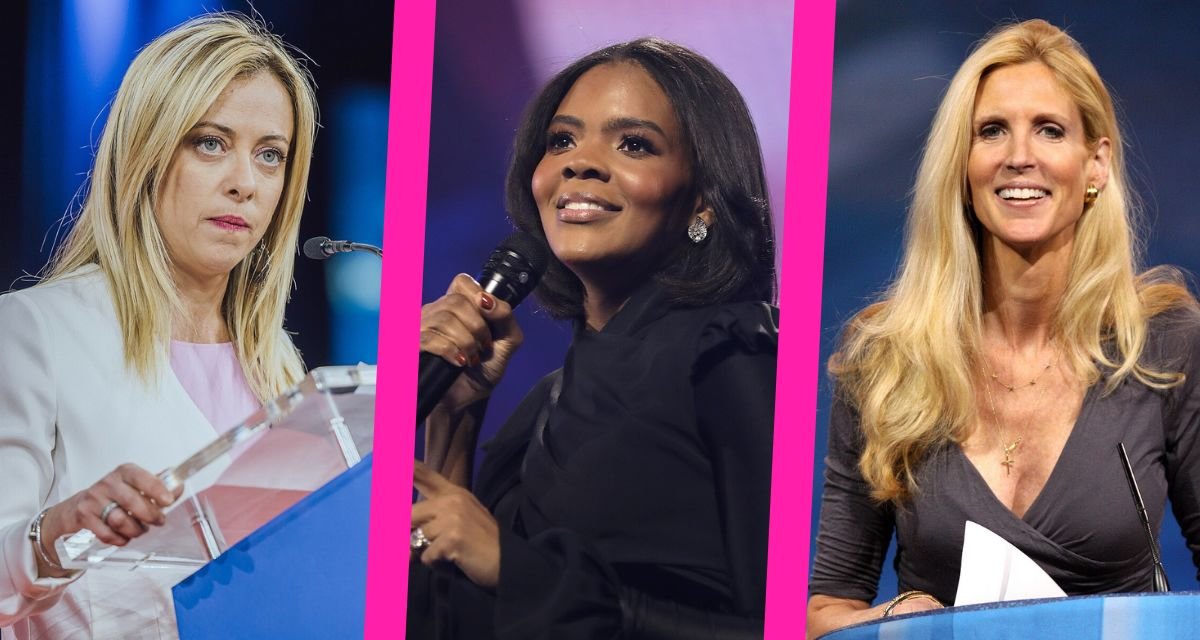
In August 2026, Italian Prime Minister Giorgia Meloni told The New York Times that feminists had fought the wrong battles, particularly regarding gender quotas. Throughout her political career, Meloni has refused to identify as a feminist and has built much of her political identity around conservative family values and traditional gender roles.
Yet Meloni’s very presence at the head of the Italian government is a remarkable demonstration of why the feminist struggle was necessary. Unfortunately, she has chosen to use a position that would have been impossible for her to attain without that struggle to promote policies that echo some of the fascist ideals of the past. Consider the fact that Italian women gained the right to vote in 1945. Had Meloni been born a few generations earlier, her intelligence, political instincts and leadership abilities would have counted for very little in a system that excluded her from political participation on the basis of her sex. The women who fought against that system were fighting for the political career of Giorgia Meloni long before Giorgia Meloni existed.
Perhaps an even more fascinating case is that of Candace Owens. In 2017, Owens published an article titled “I am NOT a feminist.” In 2019, she described feminism as a scam at the Young Women’s Leadership Summit. She has repeatedly accused modern feminism of damaging relationships between men and women and undermining family values.
Owens, a wife and mother, has written books, developed an independent media career, addressed political conferences and testified before the United States Congress. Her own life provides evidence that a woman can maintain a family, pursue an ambitious career, achieve financial independence and command considerable influence in society. The feminist movement spent decades fighting the notion that these things were incompatible with womanhood.
For someone who considers feminism a scam, Owens has certainly made excellent use of its returns.
And then we have Ann Coulter, who has said some incredibly stupid and racist things over the years, so her views on women’s rights should come as no great surprise. In an interview with the New York Observer in October 2007, the American lawyer and political commentator said:
“If we took away women’s right to vote, we’d never have to worry about another Democrat president.”
Five years later, during an interview with CNN, she again expressed her desire to take voting rights away from women and young people.
What makes Coulter’s position particularly absurd is that her entire career depends on society recognising the political opinions of a woman as worthy of public attention. She has written bestselling political books, appeared on major news networks and spent decades attempting to influence the political decisions of Americans. Apparently, a woman’s political judgement is valuable enough to influence millions of votes, but insufficient to cast one.
Coulter’s argument also provides a rather good illustration of why women’s rights must be protected by law. It takes remarkably little for someone in a position of influence to suggest that an entire sex should lose a fundamental right. In Coulter’s case, an unfavourable election result seems to be sufficient grounds.
Of course, there is the convenient distinction often made between “old feminism” and “modern feminism,” as though the former was universally celebrated and the latter suddenly became unreasonable. The suffragists were accused of destroying families, neglecting their domestic duties and disrupting the natural order of society. The women campaigning for financial independence were accused of undermining marriage. Sound familiar? Every generation of feminists has faced remarkably similar accusations from its opponents. It is quite easy to celebrate the feminist battles that have already been won, particularly when you have personally benefited from their victories. The real test is whether you recognise the inequalities that still exist and support the women fighting against them today.
There is something historically fascinating about these three women. Each has reached a position of influence that generations of women were systematically prevented from occupying. Each demonstrates, through her own career, the intellectual, professional or political capabilities that were once denied to women. And each has used some of that influence to discredit feminism or question the rights it fought to secure.
Feminism has been so successful in expanding women’s opportunities that it has even created career opportunities for anti-feminists.





















0 Comments