
Close
by Lucy Harker | Sep 3, 2026
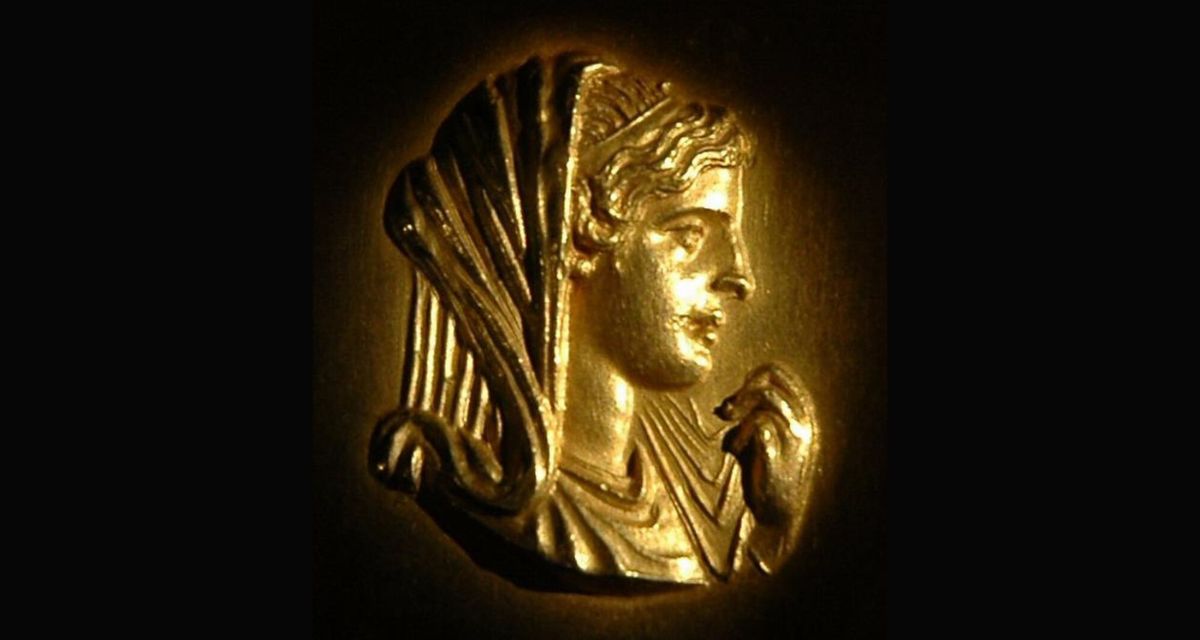
History loves Alexander the Great. We are taught that his military genius and sheer force of will allowed him to conquer the known world by the age of thirty. But behind Alexander’s rise was a woman whose political influence was just as important to his path to the throne: his mother, Olympias.
In the 4th century BC, the Macedonian royal court was not a place for the weak. It was a deadly, constantly shifting world of rival factions, assassinations, and ambitious warlords. Olympias entered that world as the wife of Philip II and quickly became a formidable presence at court. She was deeply involved in the Dionysian mystery cults and was famously associated with large, tame snakes that were said to move through her chambers. She cultivated an image of someone mysterious and almost untouchable. But beneath all of that, what really made Olympias dangerous was her political mind.
Olympias’s marriage to Philip placed her in the middle of a fiercely competitive royal household. Philip was a polygamist with seven wives, which meant the palace was a constant struggle over succession. Olympias made it her life’s mission to ensure that her son, Alexander, remained the strongest possible heir. For years, she fought her way through one rival faction after another, using the politics of the court to protect her son’s position.
The ultimate test came when Philip married a young Macedonian noblewoman named Cleopatra Eurydice. Olympias was a foreigner, and a fully Macedonian son born to this new wife could have destroyed Alexander’s claim to the throne. The tension became so severe that Olympias and Alexander were forced into temporary exile. For Olympias, this was no longer simply another rivalry within the palace. Her son’s position was suddenly in serious danger.
Shortly after, King Philip was assassinated by one of his own bodyguards.
History still debates whether Olympias had anything to do with Philip’s murder. What she did afterward, however, is much harder to debate. While Alexander rode off to secure the loyalty of the army, Olympias returned to the palace and cleared away the most immediate threat to her son’s succession. She orchestrated the deaths of Cleopatra Eurydice and her infant child, reportedly giving her rival a sword, a rope, and a cup of poison and forcing her to choose how she would die. It was horrifyingly brutal. There is no need to soften that part of Olympias’s story. But in the violent reality of ancient Macedonian politics, her actions left Alexander as the only serious claimant standing when the struggle was over.
Even when Alexander left to conquer Asia, Olympias did not disappear into the background. She remained a powerful political force in Macedonia, repeatedly clashing with the regents left in charge and fiercely defending her family’s interests. Alexander may have been building an empire thousands of miles away, but Olympias was still fighting her own political battles at home. Her influence did not end when her son left Macedonia.
Her most awe-inspiring moment, however, came after Alexander’s sudden death. His empire began to fall apart, and his generals turned on one another as they fought for power. Olympias was already an elderly woman by this point, but age did not keep her out of the struggle. She personally took to the field and led an army to defend her young grandson’s claim to the throne. After everything she had done to secure Alexander’s position, she was now fighting to protect the next generation of her family.
Eventually, she was defeated and cornered by a rival general, who sent two hundred armed soldiers to execute her. But when they entered her chambers, Olympias did not cower or beg for her life. She stood there in full royal dress, facing the soldiers sent to kill her. According to the ancient accounts, they were so struck by her presence that they dropped their weapons and refused to carry out the execution. The general eventually had to send the relatives of people she had killed to finish the job. There is something almost fitting about the image of Olympias meeting her end this way. Even at the very end, surrounded by people who had come to kill her, she was not willing to surrender the dignity of her position.
Olympias’s story is often reduced to the familiar image of the “crazy, jealous queen” or the “meddling mother.” Her actions were certainly ruthless, and some were horrifying. But those labels make her much easier to dismiss than to understand. She was navigating a political world where succession could mean life or death, where marriage was a political weapon, and where losing power could put an entire family at risk. She understood that world extremely well, and she knew how to use it.
What stays with me about Olympias is how much of her story exists in the shadow of Alexander’s. His achievements were extraordinary, but he did not simply appear on the throne and set out to conquer an empire. Before any of that happened, his mother spent years fighting over his place in the Macedonian succession. She continued that fight after he left, and even after his death, she was still willing to take the field herself. Olympias was not merely the mother of Alexander the Great. She was a formidable political figure in her own right, and her story is far more complicated, ruthless, and fascinating than the caricature history so often leaves us with.

























0 Comments