
Close
by Lucy Harker | Sep 16, 2026
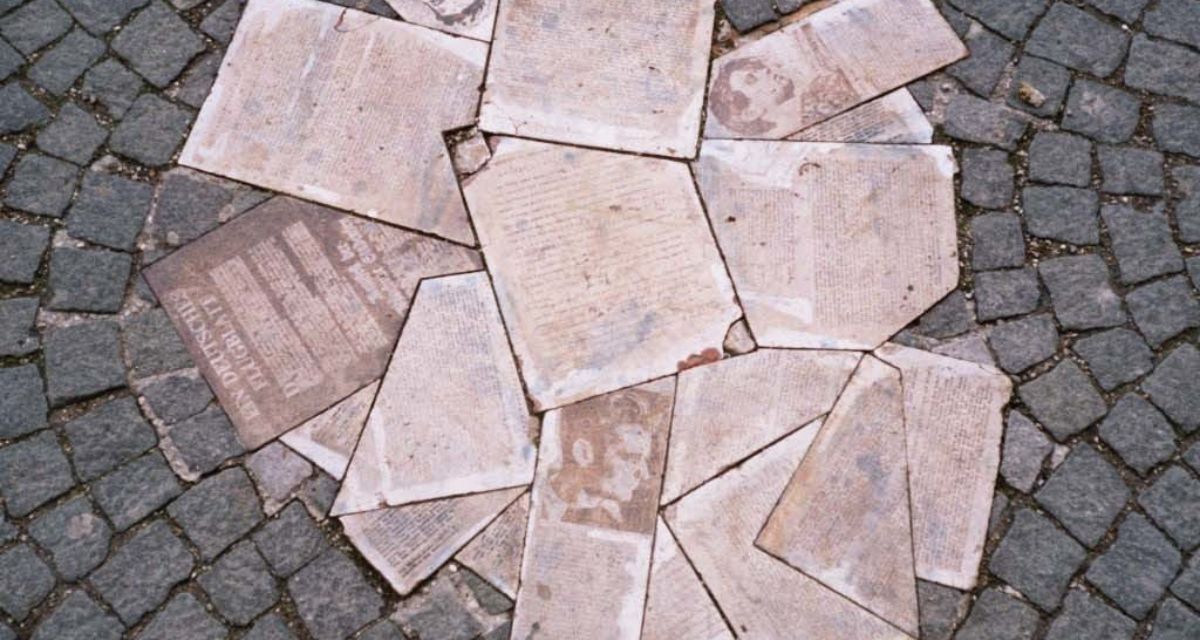
It is difficult to imagine what ordinary life looked like inside Nazi Germany in the early 1940s. The government controlled the military and the laws, but also the radio, the newspapers, and the schools. Suspicion had become part of everyday life. A neighbor could report you for listening to a foreign radio station. A coworker could decide that you did not sound enthusiastic enough about the war. Speaking against the government could have deadly consequences. In a country where silence was often the safest choice, a 21-year-old university student looked at what was happening around her and decided that silence was no longer something she could live with. Her name was Sophie Scholl.
Sophie was a biology and philosophy student at the University of Munich. She was not a politician, a soldier, or a spy. She was a young woman who had come to understand the reality of the regime around her, including the deportation of Jewish people and the brutality of the war. While much of the German public was being kept in the dark or choosing not to look too closely, Sophie, her brother Hans, and a small circle of friends decided to act. Together, they formed a secret resistance group called the White Rose.
Their goal was simple and incredibly dangerous: write, print, and distribute leaflets calling on ordinary Germans to wake up and resist the Nazi government.
Even obtaining the materials they needed could attract suspicion. In a wartime economy, paper, postage, and other supplies were rationed and monitored. A hand-cranked duplicating machine, large quantities of paper, and stacks of postage stamps were not exactly the sort of things a group of university students could buy without raising questions. Somehow, Sophie and the others managed to gather what they needed and began producing thousands of copies of their anti-Nazi essays.
Printing the leaflets was only part of the problem. Someone still had to get them into people’s hands. Sophie took on some of the most dangerous parts of that work. She packed suitcases with the papers and travelled by train across Germany and Austria. She mailed leaflets from different cities, knowing that her bags could be searched at military checkpoints. The idea was to make the White Rose appear much larger than it really was, giving the impression of a nationwide resistance network rather than a small group of university students working in secret.
By February 1943, the group had produced its sixth leaflet. On the morning of February 18, Sophie and Hans entered the main hall of the University of Munich carrying a suitcase filled with copies. They placed stacks of leaflets outside the lecture halls just before classes ended. There were still some left when they reached the top floor. Sophie carried them to the balcony and pushed the remaining papers over the edge. They fell into the open atrium below, scattering across the students gathered there.
A university custodian saw what she had done. The doors were locked, the Gestapo was called, and Sophie was arrested.
For days, she was interrogated. At first, she calmly denied involvement. Then the Gestapo searched the apartments and found evidence that made denial impossible. Sophie changed her approach completely. She took responsibility for her actions and tried to protect the others involved. More importantly, she did not apologize. She had known the risks when she printed those leaflets, and even with execution now waiting for her, she continued to stand behind what she had written. Sophie was beheaded on February 22, 1943.
There is something particularly striking about Sophie Scholl’s story because nothing about the beginning of it sounds extraordinary. She was a university student studying biology and philosophy. She had no army behind her, no political office, and no great institution protecting her. She had a small group of friends, a hand-cranked printer, and a suitcase full of leaflets. The scale of what she was up against was enormous, and she knew exactly what could happen if she was caught. Yet she still walked into that university hall carrying those papers. Four days after her arrest, she was dead. The White Rose was small, but for a brief time, it managed to put words of resistance in front of people who were being told that there was no alternative.
We live in a very different world, and most of us will never face anything remotely comparable to what Sophie faced. But the smaller parts of her story still feel familiar. We have all watched people stay quiet because speaking up might cost them a job, a friendship, a place in a community, or simply the comfort of not getting involved. We have also seen how quickly falsehoods can spread when enough people decide that challenging them is someone else’s responsibility. Sophie Scholl’s story does not need to be turned into a grand lesson for our time. Sometimes it is enough to remember that she was once just a university student standing in a room with a suitcase, deciding that there were some things she could no longer quietly accept.














0 Comments