
Close
by Lucy Harker | Sep 24, 2026
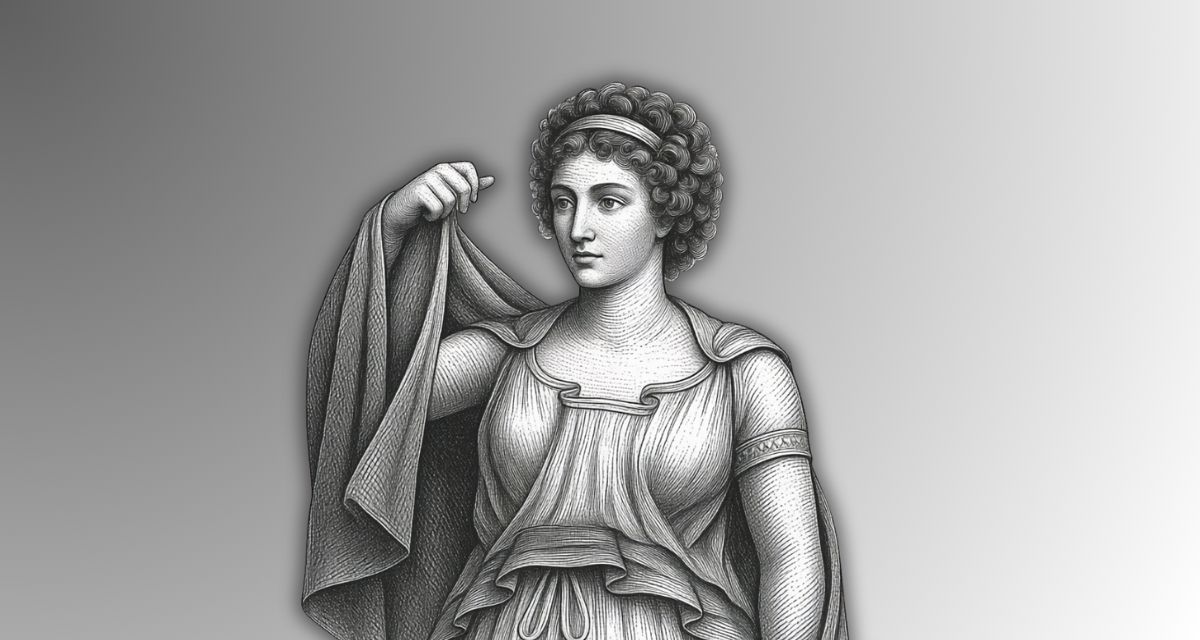
In 4th century BC Athens, women were forbidden from studying or practicing medicine, and breaking that law could mean death. For women, this created a horrifying situation. Athenian society demanded extreme modesty from freeborn women, to the point that many wives and daughters would rather endure the pain of childbirth without medical help than be examined by a male physician. Women were dying because they could not get the care they needed, and the people who made the laws were willing to live with that. As long as the rules of their society stayed untouched, the suffering of these women was apparently an acceptable price to pay. Agnodice could not accept that. She saw a system that was leaving women to die, and she decided she would find a way to practice medicine anyway.
Agnodice did not go to the archons and ask them to change the law. She cut her hair, dressed as a man, and left Athens. She went to study under Herophilus, a respected physician and anatomist of the ancient world. After learning medicine, she returned to Athens disguised as a young male doctor. She knew she could not openly practice, so she had to hide who she was while treating the women who needed her.
When Agnodice came across a woman in labor, she would offer to help. If the woman refused because she believed Agnodice was a man, she would lift her tunic and reveal that she was a woman. The woman would then trust her enough to accept her help. Agnodice delivered their babies and treated them when they were sick. The women began telling other women about her. Before long, she had become the doctor they wanted to see, even though the city had made it illegal for someone like her to do the work.
The male physicians in Athens were not concerned with the fact that women were getting better care. They were concerned that their patients were leaving. Unable to understand why this young doctor was so successful, they accused Agnodice of seducing their wives and daughters. She was brought before the Areopagus and faced the death penalty. Agnodice lifted her clothes in front of the judges and showed them that she was a woman, immediately proving that the accusation was false. But that only gave the court another reason to punish her. She had been practicing medicine while being a freeborn woman, which was against the law. So they sentenced her to death.
The women who heard the verdict were not willing to let that happen. Among them were the wives of the same magistrates, judges, and aristocrats who had condemned Agnodice. They went to the Areopagus and confronted their husbands. Women who were expected to stay quiet inside their homes were suddenly standing together in the court and demanding that Agnodice be spared. They told their husbands, “You are not our husbands, but our enemies, if you execute the woman who saved us.” The pressure became impossible to ignore. The court acquitted Agnodice, and the laws of Athens were changed to allow freeborn women to practice medicine.
Not all historians and archaeologists agree that Agnodice was a real historical figure. But whether she was a real woman or a legend, the lesson remains the same. A system can protect its rules even when those rules are hurting the people living under them. Agnodice did not let those rules stop her from becoming a doctor. She saved the women who needed her, and eventually those women stood up for her.


























0 Comments