
Close
by Lucy Harker | Jun 3, 2026
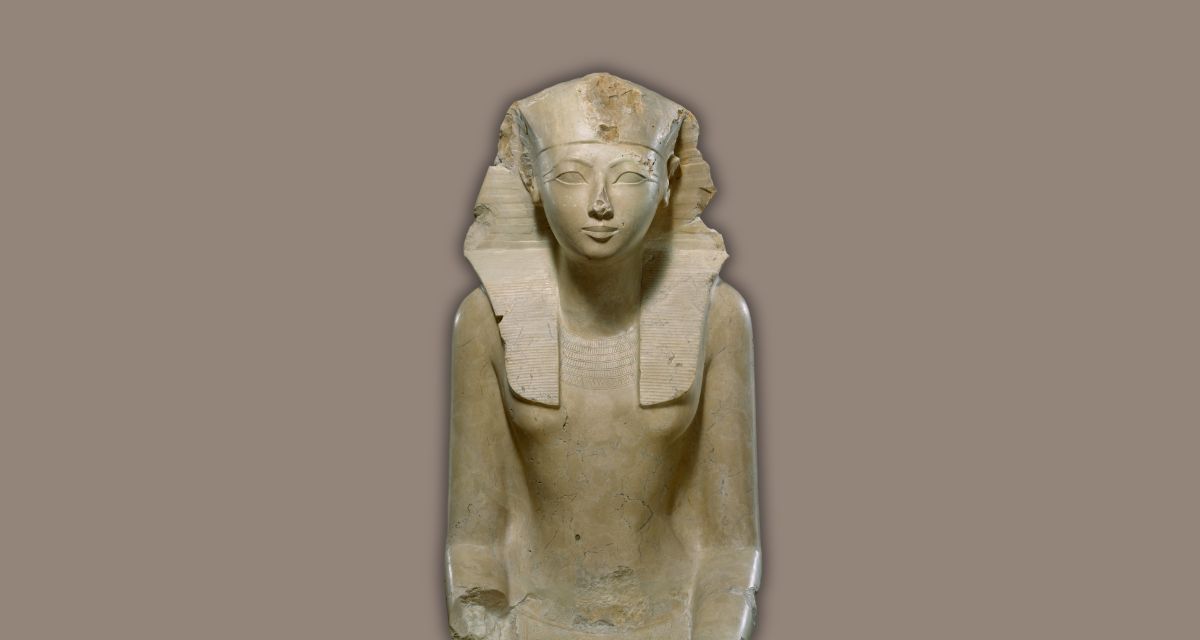
When the Egyptian pharaoh died leaving only an infant as his legal successor, the state needed a placeholder. This happened around 1479 BC, which places her reign roughly eleven hundred years after the Great Pyramid was built and fourteen hundred years before Cleopatra took the throne. Hatshepsut stepped in as the regent queen. Her job was to keep the seat warm and smile for the priests until the boy came of age. The political establishment expected a temporary babysitter to quietly step aside when the boy grew up. Hatshepsut seized absolute power and took the entire empire instead.
Taking control required bypassing a rigid political system that had zero framework for a female king. Hatshepsut systematically adopted the visual markers of absolute rule. She ordered her statues carved with the traditional ceremonial beard and assumed the formal male titles of the pharaoh. This was a calculated political hack. By checking all the religious and ceremonial boxes required by the state, she forced the elite class and the priesthood to recognize her absolute authority and legitimize her reign.
With her position secured, she pivoted the empire toward massive wealth generation. She abandoned the endless military campaigns of previous kings and directed her resources toward logistics and international trade. Hatshepsut funded an enormous naval expedition to the Land of Punt, located in the modern day Horn of Africa near Somalia. Her fleet returned loaded with raw gold, ivory, and live myrrh trees. Flooding the state with luxury goods stabilized the Egyptian economy and created a level of prosperity that made her untouchable by any political rivals.
Political power requires physical permanence. She launched one of the most aggressive building programs in Egyptian history to embed her rule into the landscape. Her mortuary temple at Deir el Bahari is a masterpiece of manipulation. She deliberately instructed her architects to build with slimmer multisided columns. This specific design was a direct copy of the older highly revered Middle Kingdom architecture built by Mentuhotep II right next door. She used ancient architectural styles to visually anchor her untraditional reign to a historic golden age and prove she belonged in the lineage of the great kings. She expanded this dominance to the Karnak Temple complex, erecting towering red granite obelisks heavily inscribed with her accomplishments. Two decades after she died, the political establishment tried to delete her. Thutmose III and his successors ordered her name chiseled out of stone monuments and smashed her statues to maintain the illusion of an unbroken line of male succession. The coverup failed completely. Her physical footprint was so deeply integrated into the infrastructure of the empire that archaeologists easily pieced her true reign back together.
Hatshepsut recognized that the system was built to keep people like her out. She learned the exact rules of her establishment and used those very protocols to bypass the gatekeepers and secure her authority. Once she had the power, she backed it up with undeniable economic results and monumental architecture that outlasted her tenure. When later rulers tried to erase her legacy from the historical record, her foundation was simply too massive for them to dismantle. That is how Hatshepsut dismantled centuries of rigid tradition, and it is the exact blueprint for taking control and excelling in a broken world today.























0 Comments