
Close
by Lucy Harker | Jul 23, 2026
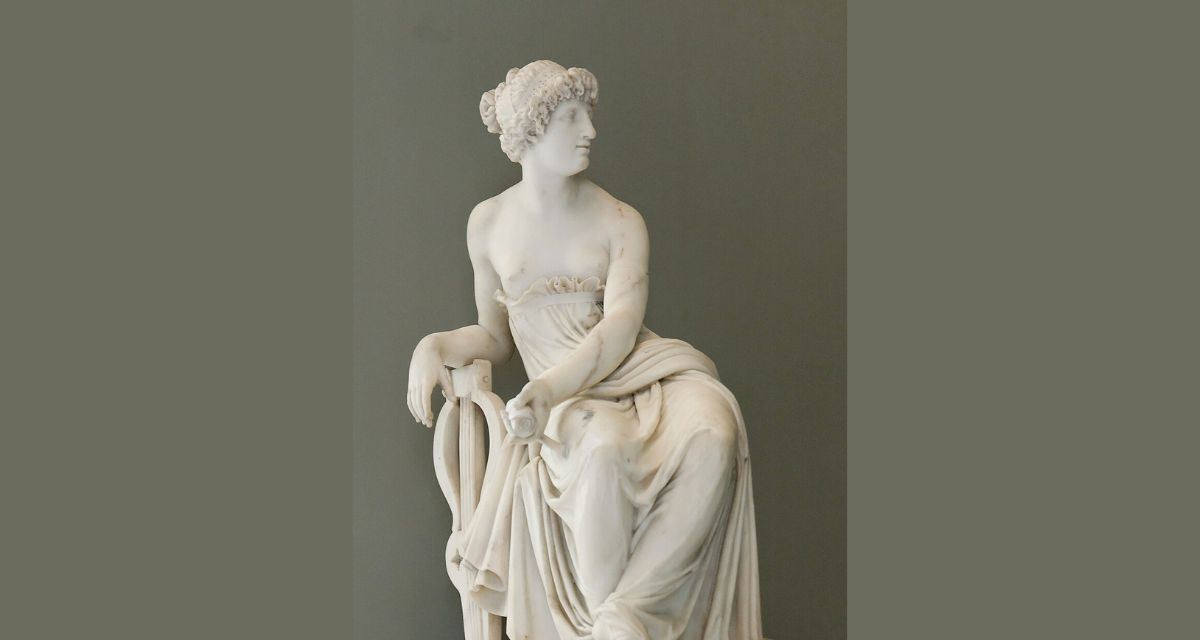
For centuries, the literary world measured greatness by the size of a battlefield. Poetry was expected to tell stories of kings, generals, and heroes whose names echoed across cities, while the gods lingered just beyond the horizon, shaping the fate of empires. The greatest works of literature were vast epics, celebrating conquest, honor, and war. Scale was everything. The quiet terrain of the human heart, particularly the inner lives of women, was rarely considered worthy of the same attention. Then, in the seventh century BC, on the Aegean island of Lesbos, one woman lifted a lyre and quietly redirected the course of poetry itself.
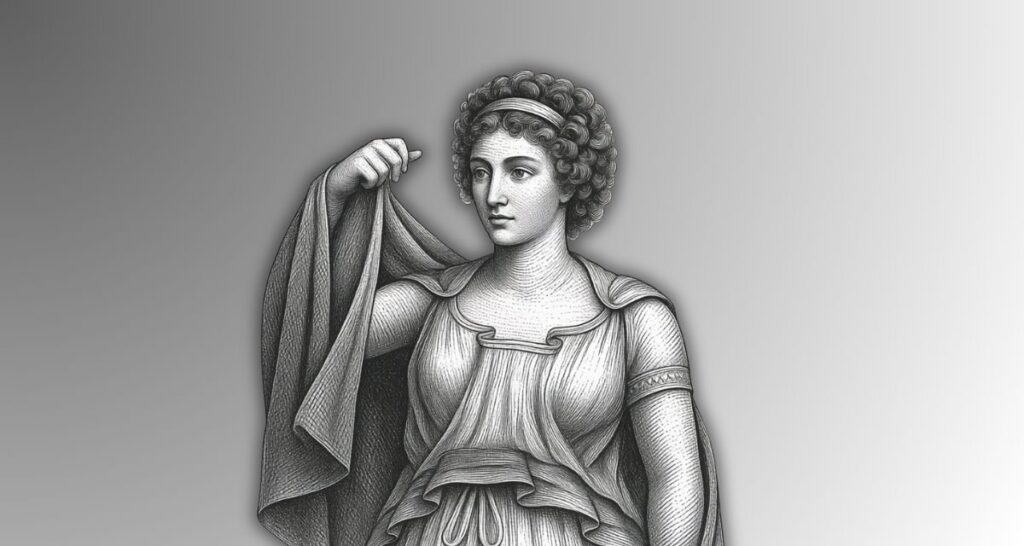
Sappho stepped away from the epic tradition rather than trying to compete with it. Where others chronicled wars and immortalized legendary rulers, she turned her attention to desire, longing, jealousy, and heartbreak, the conflicts carried not across kingdoms but within a single soul. Writing in the first person, she transformed lived experience into poetry with an intimacy that felt entirely new, laying the foundations of what would become lyric poetry.
In Sappho’s world, poetry was not meant to live silently on a scroll. It was performed before an audience, sung to the music of a lyre, where melody and verse became inseparable. Ancient tradition credits her with introducing the plectrum, the earliest known guitar pick, allowing the strings to be played with greater force and clarity. Her words were not simply read. They were heard, carried by music that gave every line a physical presence and invited listeners into the emotional landscape she had created.
On Lesbos, she built more than a body of work. She created an artistic world centered on women, one that existed beyond the expectations of a male audience. Her poetry spoke openly of love and desire between women without apology or qualification, offering experiences that had long been absent from the literary record. In doing so, she quietly challenged the assumption that only the triumphs of warriors deserved to endure. The emotions she placed at the center of her work possessed a permanence all their own.
The centuries that followed became a struggle over memory itself. Conservative Greek scholars, and later the medieval Church, regarded Sappho’s independent and openly queer voice as something that should not be preserved. Her poems were copied less and less. Scrolls disappeared. Much of her work was lost, whether through deliberate destruction or the quiet neglect that can erase a library as effectively as fire.
Yet her voice refused to vanish.
Today, only fragments and a small number of complete poems remain, but those surviving lines continue to stand among the earliest and most influential works in the Western poetic tradition. Even Plato recognized what history could not dismiss, naming her “The Tenth Muse.” It is a remarkable legacy for a poet whose life’s work survives largely in pieces, each fragment offering only a glimpse of a voice that once filled rooms with music.
The questions that surrounded Sappho have never entirely faded. Every generation decides which voices belong at its center and which are expected to remain at the margins. Women are still asked to soften their perspective, reshape their stories, or fit comfortably within traditions they did not create. Sappho chose another path. She did not wait for permission to enter an existing stage. She built one of her own, proving that the most enduring revolutions are not always fought with armies or crowns. Sometimes they begin with a single voice, a handful of strings, and the courage to sing a different story. More than two and a half millennia later, even the surviving fragments are enough to remind us that some voices leave marks no amount of silence can erase.











0 Comments