
Close
by Lucy Harker | Oct 1, 2026
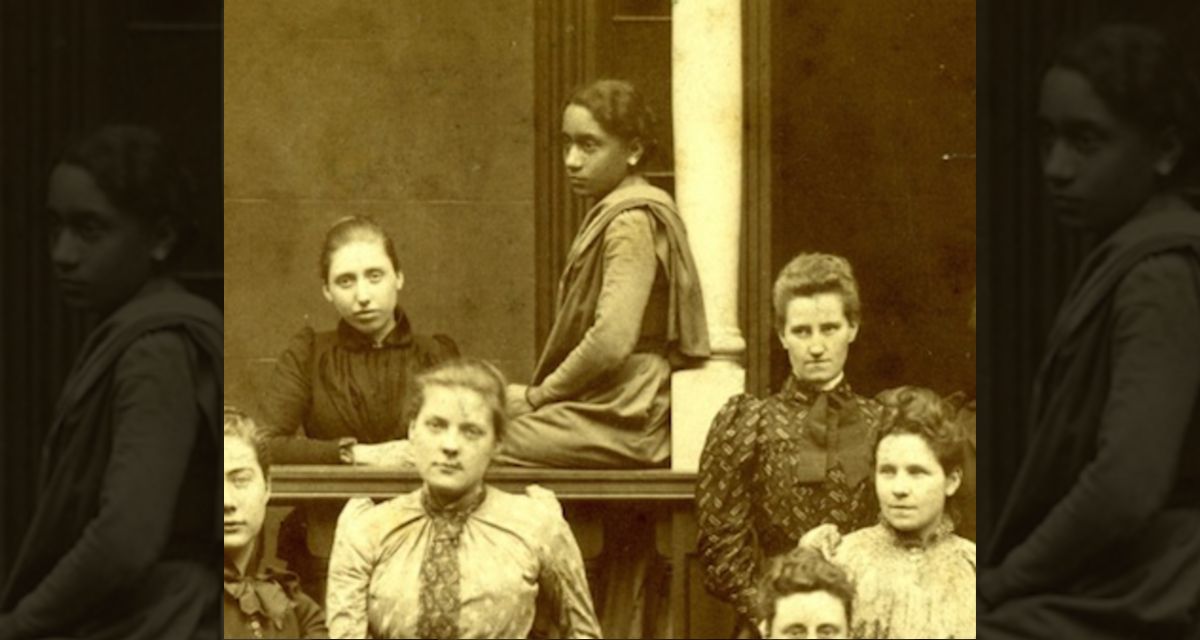
In 19th-century colonial India, a girl’s future could be decided before she was old enough to have much say in it. Child marriage was common, and girls could be married years before they were old enough to understand what marriage would mean for their adult lives. Once the marriage had been performed, however, the question of what happened when the girl grew up was considerably less simple. Could a marriage entered into during childhood bind a woman who had never chosen it for herself? In the 1880s, that question found its way into a courtroom through the case of a young woman named Rukhmabai.
Rukhmabai had been married at eleven to Dadaji Bhikaji, who was nineteen. She did not immediately move into his household. Instead, she remained with her mother and continued her education, becoming an unusually well-educated young woman for the time. She read widely and followed the social reform debates taking place around her. As she grew older, Dadaji expected her to join him and begin married life. Rukhmabai had other ideas. She did not believe that a decision made for her when she was a child should decide where she lived, whom she lived with, or what happened to the rest of her life.
Dadaji took her refusal to court. He filed a suit for “restitution of conjugal rights,” a legal remedy inherited from English law and used in the colonial Indian courts. In practical terms, he was asking the court to order Rukhmabai to live with him as his wife. The case therefore involved more than a disagreement between two people. It raised an uncomfortable question about what a childhood marriage actually meant once the child had become an adult.
In 1885, Justice Robert Pinhey ruled in Rukhmabai’s favor. He concluded that the court could not simply force her into a marital relationship she had not consented to as an adult. Dadaji challenged the decision, and the dispute continued through further legal proceedings as the courts wrestled with Hindu marriage law and the colonial doctrine of restitution of conjugal rights. Eventually, Justice Farran issued a decree ordering Rukhmabai to live with her husband. If she refused, she faced six months in prison.
She refused.
Rukhmabai made it clear that imprisonment was preferable to being forced into a marriage she had never chosen for herself. She also took the argument outside the courtroom. Writing under the name “A Hindu Lady,” she published letters in the press about child marriage, women’s education, and the idea that a marriage arranged during childhood should remain binding for the rest of a woman’s life. The case attracted attention in both India and Britain, drawing social reformers and the press into an increasingly heated debate about marriage, consent, and the rights of women.
The dispute finally ended in 1888. Dadaji agreed to give up his claims in return for Rs. 2,000. Rukhmabai did not have to move into his household, and she did not serve the prison sentence that had been threatened. By then, however, the woman who had spent years fighting over the right to decide her own future had another plan for that future. With financial support from people who had followed her case, she went to England to study medicine.
She enrolled at the London School of Medicine for Women and trained at the Royal Free Hospital. Becoming a doctor was hardly an ordinary path for a woman at the time, and completing her medical education required further study in Edinburgh. Rukhmabai eventually returned to India as one of the country’s early women physicians. In 1895, she became Chief Medical Officer at the Women’s Hospital in Surat and later held the same position at the Zenana Hospital in Rajkot. She spent decades treating women and children and continued working as a doctor until retiring around 1930.
Her case also became part of the larger debate surrounding child marriage and marital consent that contributed to the passage of the Age of Consent Act in 1891. The law did not outlaw child marriage. Instead, it raised the age at which sexual intercourse with a wife was legally treated as rape under the Indian Penal Code. Rukhmabai’s case was one of several developments that pushed the subject of child marriage and the legal rights of girls further into public discussion.
The India in which Rukhmabai lived had laws and customs very different from those of today. Still, there is something unsettlingly straightforward about the problem she faced. A decision had been made about her when she was eleven, and years later, the legal system was being asked to make that childhood decision binding on the adult woman she had become. Rukhmabai spent years arguing that it should not. Then she went on to become a doctor, treating women and children in a country where women had only recently begun entering the medical profession. The marriage that had been chosen for her did not disappear from her history, but it did not get to decide what happened next.
























0 Comments