
Close
by Lucy Harker | Jul 30, 2026
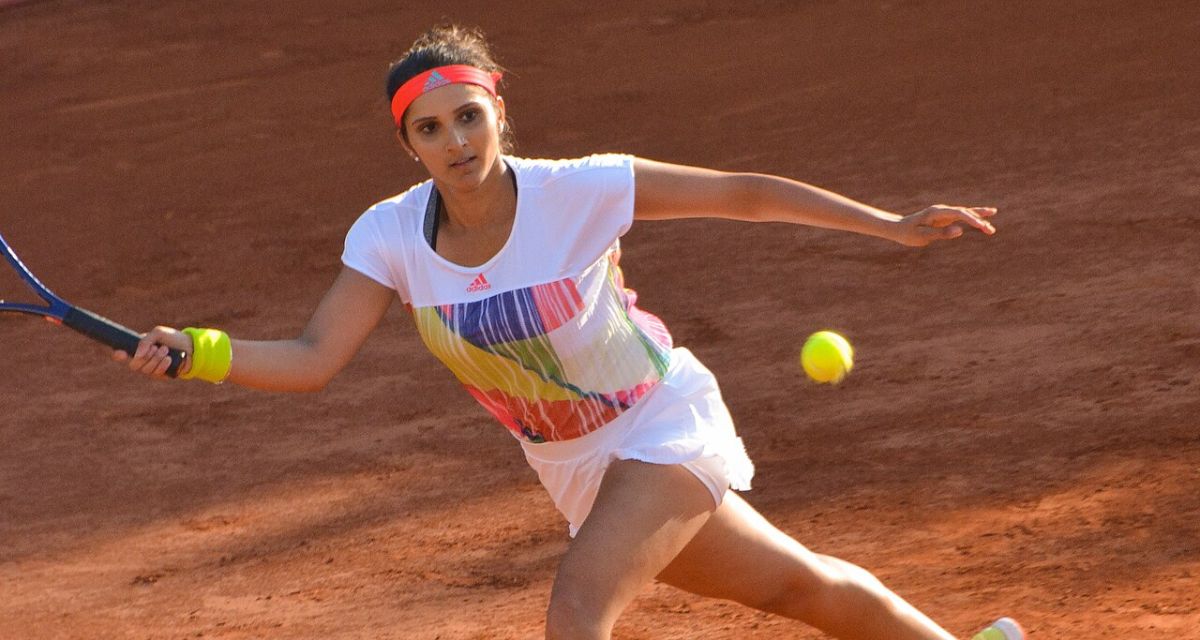
There was a time when the world only knew one way to look at a female athlete. Tennis was no exception. Everything had its place. The white uniforms. The quiet applause. The perfect image of what an athlete was supposed to be. It was a world that protected tradition, and anyone who stepped outside those lines was immediately noticed. Then Sania Mirza arrived.
A teenager from Hyderabad walked onto that court carrying nothing but a powerful forehand, a fearless attitude, and no interest in bowing down to their rules. India had never seen a female tennis player reach that level before. There was no path waiting for her. No example to follow. She had to create her own. And the world did not make it easy.
Before people could talk about her victories, religious bigots stepped in to discuss her clothes. Before celebrating her talent, they judged her choices. Islamic clerics in India issued “fatwas” against her appearance, while the media focused on her personal life, her identity, and everything except the numbers on the scoreboard. Both the religious boards and the press seemed to have an opinion about who she should be.
They wanted her to become smaller. Quieter. Easier to accept. But Sania Mirza served the ball back into their faces.
She did not walk onto the court trying to convince anyone that she deserved to be there. She did not apologize for existing in a space where many people did not expect to see her. Instead, she answered in the only language that mattered in tennis.
Her game.
She turned the attention against those who tried to control her. Wearing shirts with messages like “Well Behaved Women Rarely Make History” and “You Can Either Agree With Me or Be Wrong,” she made it clear that she was not interested in playing the role people had written for her. She was not there to be the perfect symbol of anyone’s expectations. She was there to win.
And that fight followed her everywhere. The pressure, the criticism, and the constant need to defend herself would have exhausted many athletes. It would have been easier to step away. Easier to become quiet. Easier to change. But Mirza took all of that anger and turned it into fuel.
When injuries changed the direction of her singles career, she did not let that become the end of her story. She found a new path in doubles and mastered it completely. She adapted, rebuilt, and proved that losing one battle does not mean losing the entire war.
Eventually, the numbers became louder than the criticism ever was. Six Grand Slam titles. Ninety-one weeks as the world’s number one doubles player. A legacy that could no longer be ignored.
People could talk about her clothes. They could talk about her attitude. They could talk about everything except the thing that mattered most.
She won.
That is the part nobody could take away from her.
The world will always have something to say. Someone will always ask you to be less intense, less different, less yourself. They will tell you how to look, how to speak, and how much space you are allowed to take. But some people are not built to fit into the picture others create for them. Some people are built to change the picture completely. Sania Mirza did not win because everyone accepted her. She won because she stopped waiting for them to. She stepped onto the court, held her ground, and let the results speak.
And sometimes, that is the loudest answer you can give.
Featured image:
Carine06 from UK, CC BY-SA 2.0, via Wikimedia Commons




















.jpg)
Your writing is genuinely inspiring. This series is absolutely fireee
Thank you, Dew 🙂 That’s so sweet!
If you have suggestions about other women we can write about, please feel free to send suggestions.