
Close
by Lucy Harker | May 27, 2026
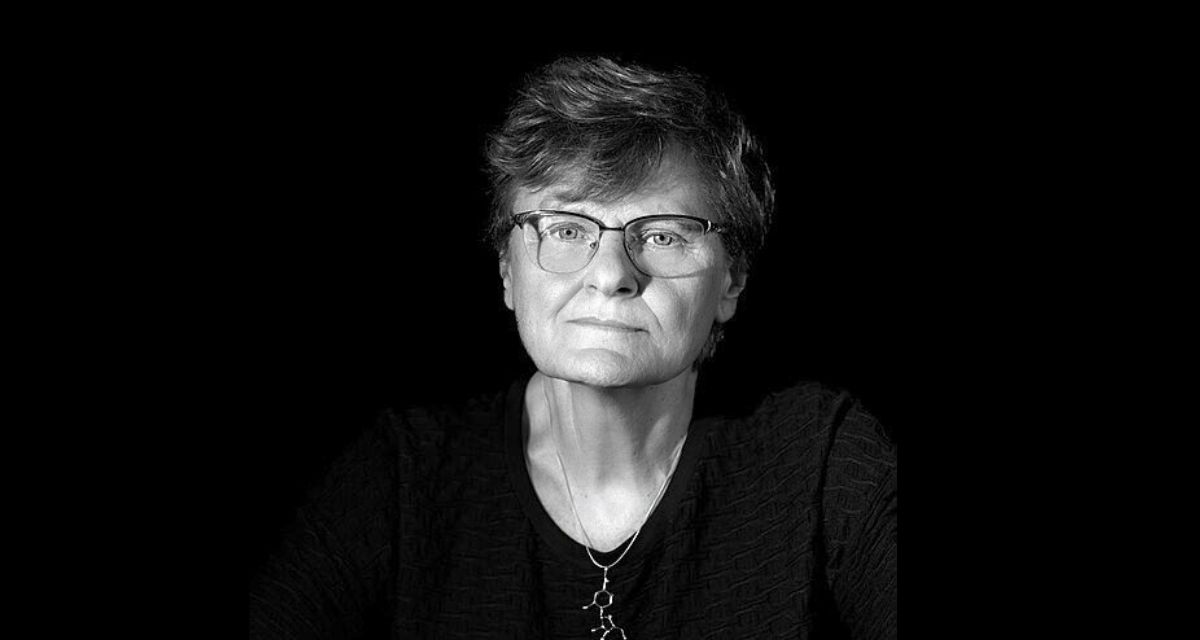
In the 1990s, the academic establishment reached a firm consensus: synthetic messenger RNA was a clinical dead end. Every attempt to use it triggered a destructive immune response. The funding evaporated, and researchers abandoned the field. Katalin Karikó didn’t. When the University of Pennsylvania demanded she drop her mRNA research in 1995, she chose a demotion and a massive pay cut over abandoning her project. She understood the foundational chemistry better than her superiors. The microscopic structural fix she engineered in 2005 didn’t just prove the academic consensus wrong, it provided the exact blueprint required to build the COVID 19 vaccines fifteen years later.
Karikó’s career began in postwar Hungary. The daughter of a butcher, she earned her Ph.D. in biochemistry from the University of Szeged. By 1985, her research funding dried up. With her options in Hungary dead, she landed a position at Temple University in Philadelphia. Strict government rules locked down money transfers, complicating her exit. Karikó and her husband sold their car on the black market, stuffed the cash equivalent of $900 into their two year old daughter’s teddy bear, and got on a plane. By 1989, she moved to the University of Pennsylvania to lock in on one highly specific target: messenger RNA.
The concept behind mRNA was brilliant but difficult to execute. The goal was to write a temporary genetic recipe that tells the body’s own cells how to manufacture specific proteins, effectively turning the human body into its own medicine factory. The biological reality, however, was a disaster. Whenever researchers tested synthetic mRNA, the body’s immune system saw it as an invading virus. The immune system went on the attack, destroying the mRNA on sight and triggering massive, dangerous inflammation.
Because the tests kept failing, the money vanished. Government grants and private funders universally blacklisted Karikó’s applications. The establishment had made up its mind that mRNA would never work. By 1995, the university administration handed her a brutal ultimatum: drop the mRNA research, or lose her shot at a permanent professorship and take a severe pay cut. Concurrently, she was diagnosed with cancer. Karikó took the demotion, swallowed the pay cut, underwent surgery, and went right back to the lab.
The turning point happened at a campus photocopier in 1997. She ran into Drew Weissman, a newly hired immunologist. They merged her RNA expertise with his deep read on the immune system. It took them years to isolate the exact trigger causing the fatal immune response. They realized that one specific building block in the synthetic RNA code was tripping the body’s alarm system.
Their fix was a straight, microscopic chemical swap. They replaced that noisy building block with a slightly modified version that already exists naturally in the human body. That single tweak was the master key. It allowed the synthetic mRNA to slip past the immune system’s radar completely undetected. The cells read the instructions and got to work without sounding the alarm.
They published the breakthrough in 2005. The scientific community barely blinked. The university eventually offloaded the licensing rights to the modified RNA patent to a small lab supplier for $300,000, a fraction of its actual worth. Realizing academia would never push her work into actual clinical use, Karikó walked away in 2013. She took a senior vice president spot at an obscure German biotech firm called BioNTech.
Then 2020 hit, and global infrastructure flatlined. When pharma companies scrambled to build a vaccine, both BioNTech (teaming up with Pfizer) and Moderna utilized Karikó and Weissman’s exact 2005 chemical swap. That specific tweak made the rapid rollout of the mRNA vaccines physically possible. In 2023, decades after being demoted, defunded, and sidelined, Katalin Karikó and Drew Weissman walked away with the Nobel Prize in Medicine.
Katalin Karikó’s trajectory rips apart the myth of the overnight scientific breakthrough. She survived decades of institutional rejection, financial hits, and academic exile simply because she knew her math and chemistry were right. Her story is the ultimate proof that authority and industry consensus mean absolutely nothing in the face of hard data. She outlasted an entire system designed to push her out, and her absolute refusal to concede ended up saving millions of lives.



















0 Comments