
Close
by Lucy Harker | Jul 8, 2026
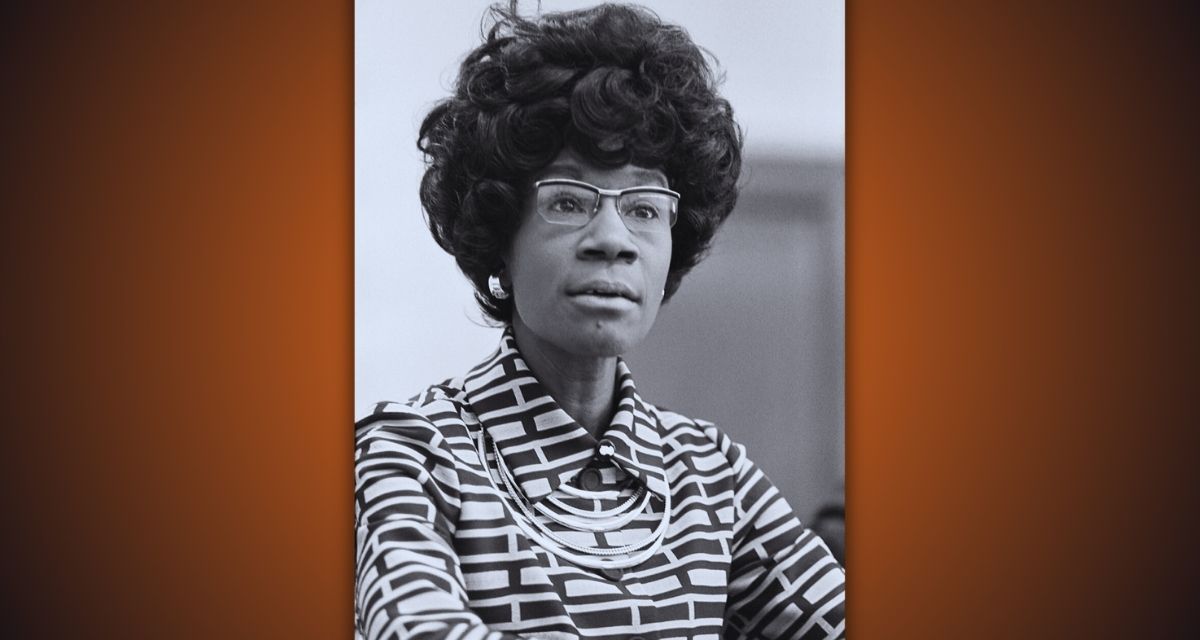
In the late 1960s, Uncle Sam was choking on a suffocating political machine run by men who traded favors in closed rooms while cities burned from civil unrest. The Cold War was raging, the civil rights movement was bleeding out on the pavement, and the US government was a closed loop designed to keep the marginalized permanently locked out of the room. Shirley Chisholm was a Brooklyn educator who looked at that rigged, impenetrable structure and decided to break it apart from the inside.
To understand what she was up against, you have to look at the American political hierarchy. The system is monopolized by two massive factions, the Democrats and Republicans, but it’s also rigidly layered. At the local level, there’s the State Assembly, which handles regional laws and budgets. Above that is the federal government, specifically the House of Representatives, where hundreds of politicians battle over national legislation. Sitting at the absolute top of the food chain is the President. The entire structure was an exclusive club, and candidates were expected to wait their turn and rely on party bosses for permission to climb that ladder.
Chisholm cut her political teeth in Bedford-Stuyvesant, Brooklyn, where she realized the local Democratic clubs were entirely disconnected from the decay of the actual neighborhoods. Bypassing the bosses, she organized directly with women and community groups who were exhausted from being ignored, channeling that stagnant frustration to win a New York State Assembly seat in 1964. By 1968, she aimed higher. Running under the legendary motto “Unbought and Unbossed,” she dismantled the establishment’s chosen candidate to become the first Black woman elected to the national House of Representatives. The Washington machine immediately tried to bury her by assigning her, a representative from a dense urban district, to the agricultural committee. Rather than accepting the insult quietly, she publicly demanded reassignment, forcing the institution to recognize that she would not be shoved into a corner.
The peak of her defiance was the 1972 presidential run, an act of pure, calculated disruption. She knew the presidency was statistically out of reach, but the campaign was a weapon to force the Democratic party to acknowledge the antiwar movement, the working class, and minorities. The establishment fought back hard, blocking her from participating in televised primary debates. Instead of backing down, she dragged the TV networks to federal court, citing the equal time rule, and legally forced them to give her the national airtime she was owed just to state her case.
That run was brutally isolating and physically dangerous. She survived multiple assassination attempts on the campaign trail, ultimately requiring the Secret Service to step in and protect her. Yet, worse than the physical threats was the betrayal from her own supposed allies. Prominent male civil rights leaders dismissed her campaign as a vanity project, and leading white feminist icons abandoned her when it became politically inconvenient, calculating that a white male candidate was a safer bet. She carried the campaign anyway, dragging the neglected reality of the marginalized onto the convention floor through sheer force of will.
The 1972 Democratic National Convention ultimately crowned a white, male establishment candidate, but Chisholm still arrived on the floor in Miami commanding 152 delegate votes. That block of votes was a weapon, giving her the leverage to force the party machinery to negotiate on issues they preferred to ignore. Once the convention ended, she returned to the House of Representatives and spent another decade drafting legislation for childcare, domestic workers, and the minimum wage, executing the unglamorous, brutal work of forcing the system to serve the people it despised.
What I, as a woman, take away from her story isn’t some sanitized, optimistic narrative about breaking glass ceilings or finding your tribe. Chisholm’s reality proves that the system will never willingly hand over the keys, and the people who are supposed to be your allies will often evaporate when things get difficult. Her legacy is about recognizing that standing your ground usually means standing completely alone, and that true power comes from remaining completely unbought and unbossed, refusing to dilute who you are just to make a broken establishment comfortable.






















0 Comments